
Where in the suggested casting weights do lure rods perform the best?
For reasons that will become very apparent around the end of May/early June, over a number of months now I have been fishing with a bunch of different lure rods which have gone through a number of different iterations to get to where they are right now. It’s been fascinating to try and work out the suggested casting weights and where each rod feels like it’s performing the best when one also takes into account how different lures and types of lures cast and so on………………

And it gets me thinking about a lot of different lure rods that I have fished with and often reviewed on here over the years. As a consumer I have no choice but to choose a fishing rod that comes with a suggested casting range of weights that has been decided upon by anglers or business people I most likely know nothing about. Most of the time I tend to agree with the suggested casting weights which are printed on the rods, but sometimes I don’t, and it’s very apparent how differently say a 30g metal feels in the cast compared to a 30g soft plastic on a jig head compared to a 30g surface lure and so on. I would argue that if you try moving a 35g paddletail on a jig head as fast in the cast as you might move the 35g Surf Seeker on a rod rated say 7-35g then you could be in trouble, but the tackle company says 7-35g so surely you should be able to do it?
Or is it up to us the anglers to use a bit of common sense and work out where each rod we might fish with seems to perform the best? I wouldn’t personally be buying say the outstanding Major Craft Triple Cross EU Custom 9’ 10-30g lure rod as a rod for fishing the 30g Surf Seeker all the time. For sure the rod will bang the thing a country mile, but is it performing at its best right at the top end of its suggested casting weight? The suggestion might be 10-30g, but my Epic Berlingo says 140mph as the top speed on the speedo and I’d suggest that if the car could actually get up there that bits might start falling off it! The Major Craft Triple Cross EU Custom 9’ 10-30g lure rod chucks the 30g Surf Seeker really well, but I personally think the rod performs far better when you don’t go pushing the top end - and this is completely normal. I’d personally be stepping up to say a 10-45g lure rod if fishing with a 30g Surf Seeker was a big part of some of my fishing. Find that sweet spot and to me the good lure rods don’t feel like they are really trying.
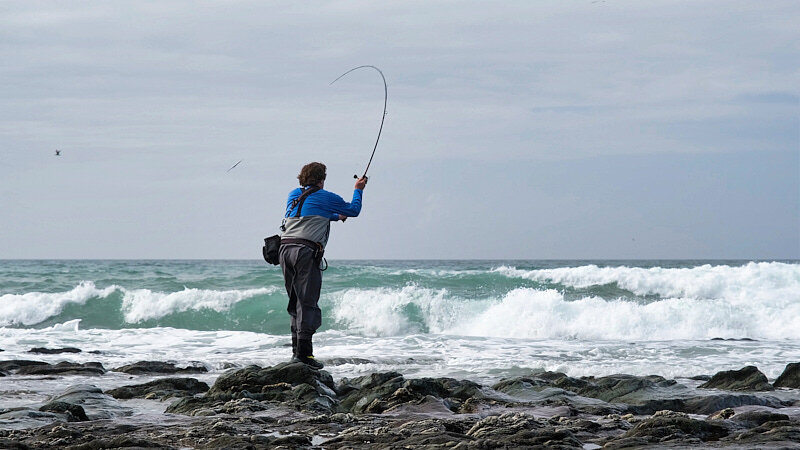
So for reasons which I can’t yet divulge I have spent a lot of time trying to work out how far certain rods can be pushed, and then where they seem to be performing at their best. If you had all the space possible on a rod blank it would make a lot of sense to provide casting weight suggestions that actually differ depending on the type of lure you are casting, but this is obviously not practical and it could also be somewhat confusing. As I said earlier, a 35g paddletail obviously weighs the same as a 35g metal, but putting a rod through the process of casting them requires different timing from us, and then I guess a different kind of load and release through the actual rod. I am sure you have noticed how you can feel the increased air resistance when casting a soft plastic and then a smaller profile metal lure which weighs exactly the same - but we’re asking the rod to cope just the same, and it’s been really interesting trying to figure all this out. You all have a good weekend, please stay safe and well, see you next week with a load of info on some new lures and components which I have been so excited about for ages now and I am finally allowed to tell you all about them……………….
Disclosure - If you buy anything using links found around my website, I may make a commission. It doesn’t cost you anymore to buy via these affiliate links - and please feel entirely free not to do so of course - but it will help me to continue producing content. Thank you.