
It can be pretty alarming what a fishing rod goes through in a cast
We fished the most stunning bass fishing conditions yesterday morning and we didn’t catch a single fish. The first bit of movement in the water for a fair while, the clarity was almost alarmingly good, we have all caught plenty of bass from here before in similar conditions and time of the year, but it just ain’t happening yet. If a blank can be glorious though then this was just that - fishing with some good people on a stunning bit of coastline in some conditions that felt like you were going to hook a fish literally every single cast. I’ll take that on a Sunday morning. I also lost a beloved Matt White colour Sandeel Pencil 150 lures to a rock when I gave it a bit too much time on a spin-stop as the current swung it around. For a second everything went wonderfully solid and I thought I was into my first bass of the season…………….
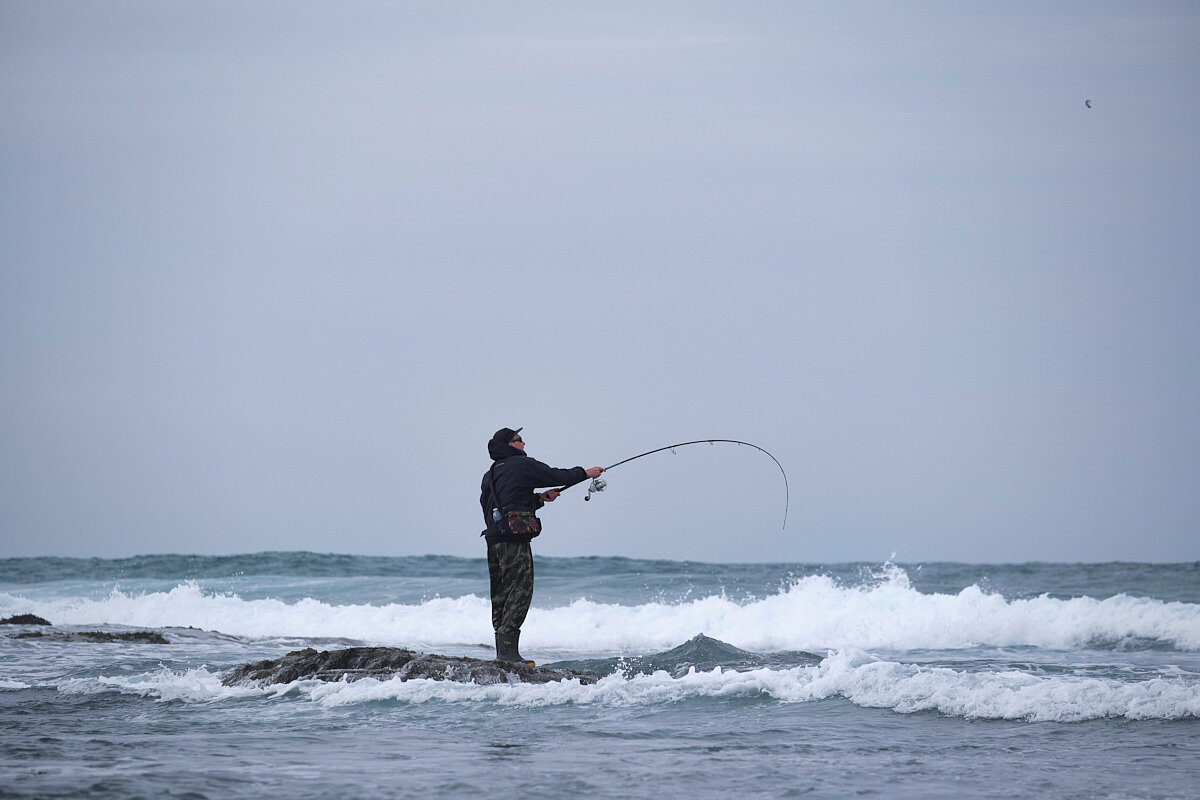
I am always carrying camera gear with me and I am always itching to put my fishing gear down and shoot a bunch of photos when the opportunity arises. I love photographing casting against waves and big skies, and for various work related reasons it’s always useful to shoot a few casting sequences and keep them on various hard drives for future use. I can run my Fuji X-T4 at 15 frames per second if needs be, and with a correspondingly large aperture and fast shutter speed you can literally see everything in a single cast. The photo above might look slightly alarming, but it’s just one frame from a sequence and it jumped out at me for obvious reasons.
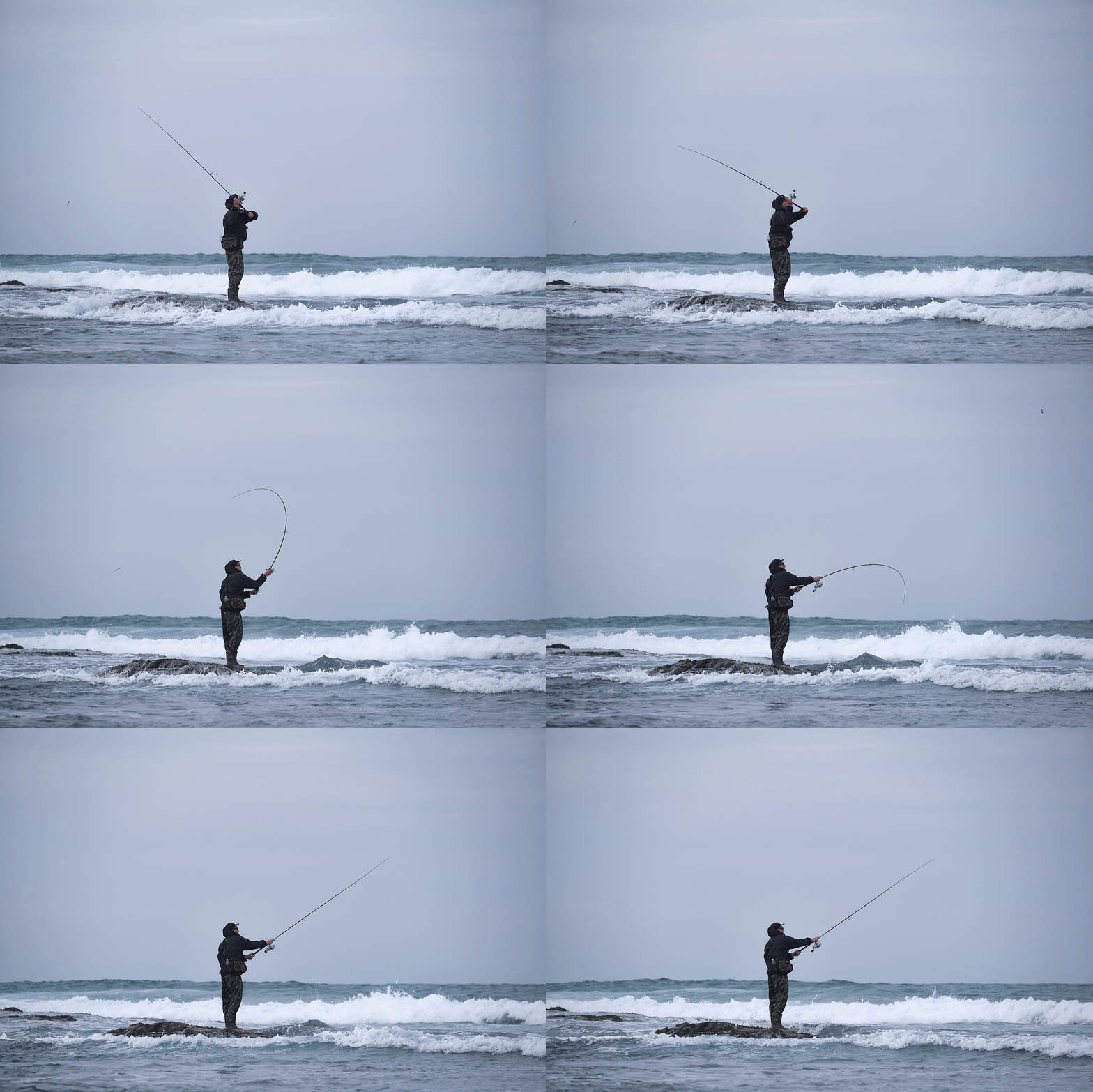
The whole sequence is in the GIF above which I hope works okay for you on whatever device you are reading this blog post. It’s from the start of the cast to the moment when the lure rod has properly straightened/recovered at the end of the cast, and because it’s fifteen frames long I am summising that Charlie’s cast all happened within the space of one single second. I get to photograph a lot of different anglers casting lure rods especially, so firstly I know some anglers’ casting styles pretty well, and secondly it seems that most casts on a modern lure rod takes about that one second from start to full rod recovery at the end. And there’s a lot going on in that single second.

The lure rod Charlie is using is a Smith Dragonbait Seabass 11' 40-100g, a rod I don’t know but it puts his lures out there just fine, and I guess deals with a lot of hectic-ground and hectic-conditions bass fishing. He is casting a Fiiish Black Minnow and as you can see he is not holding back and can seriously put a lure out there. I find it pretty remarkable to see the contortions that a length of carbon fibre can go through in a cast, and I am going to make an educated guess here that although the rod can’t not follow through if you like - as per above again - this following through must surely be cutting down the potential distance a bit. Please note that this is not remotely unique to this particular rod by the way - I could show you loads of casting sequences with loads of different rods where you are seeing a similar thing. As much as it might feel that our modern lure rods are bending under load and then unbending directly to straight as we come through if that makes sense, they very obviously cannot and are not, and because I am shooting at high frame rates I get to see all this on a computer monitor afterwards.
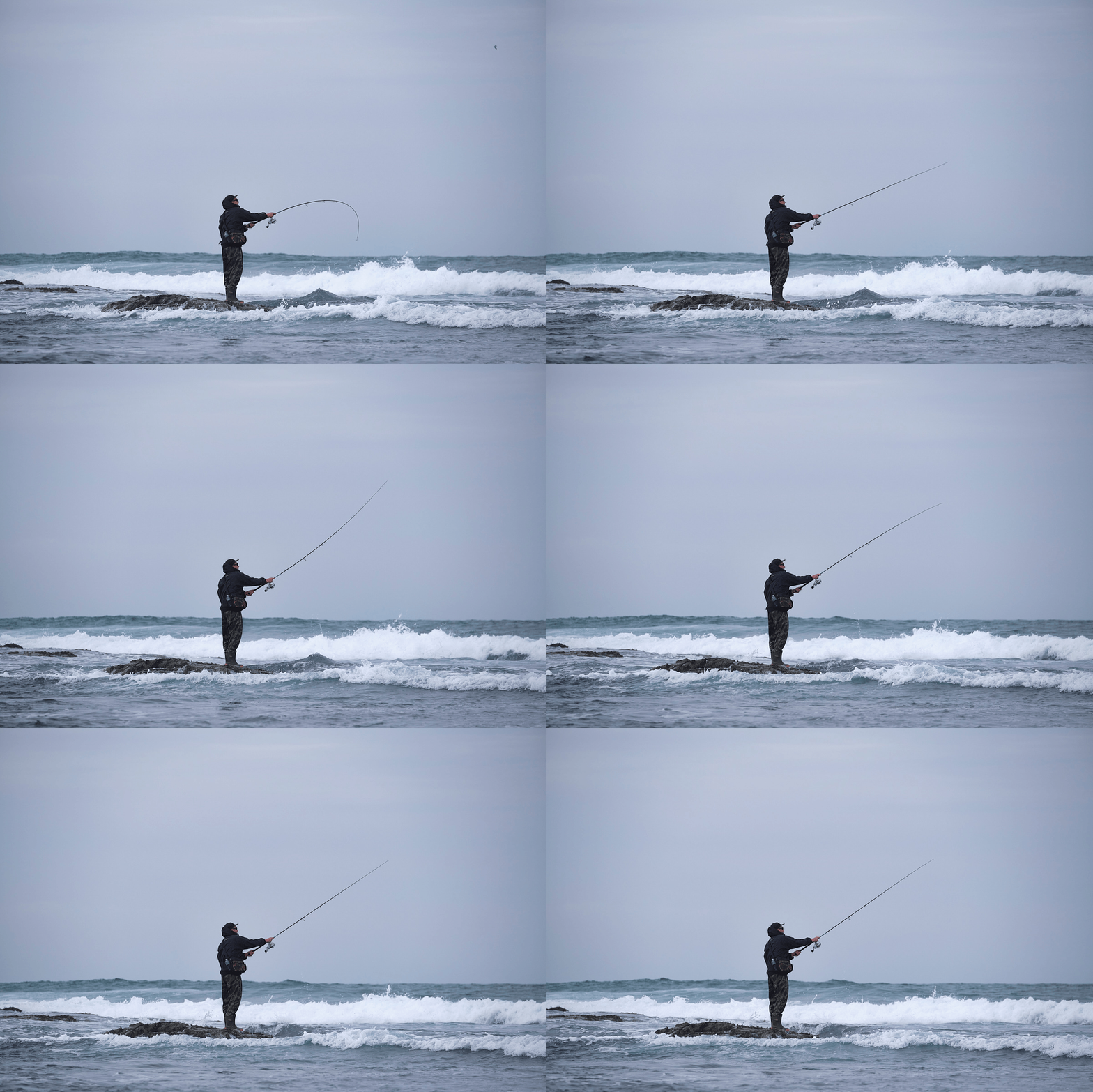
So I then get to thinking that the faster a rod recovers back to straight, the better a lure or indeed a bait goes out there. I am not a fishing rod engineer as you might have guessed, but the less time that rod spends not pointing straight at the lure or bait or fly as they go out in the cast, the better your mainline can travel through the guides and the better/further your lure or bait or fly casts. I can remember when I first started really getting into lure fishing for bass and some of the longer, floppier, old style spinning rods I was photographing would take a fair few downs and ups before returning to straight, but look at the sequence above of Charlie’s rod yesterday from down to straight - for sure that “down” looks somewhat alarming (look closely you can see the Black Minnow going out in the top right of the photo further up that shows the rod bending right down), but then look how quickly his rod literally “snaps” back to straight. As I said, I am no engineer, but that looks bloody impressive to me.
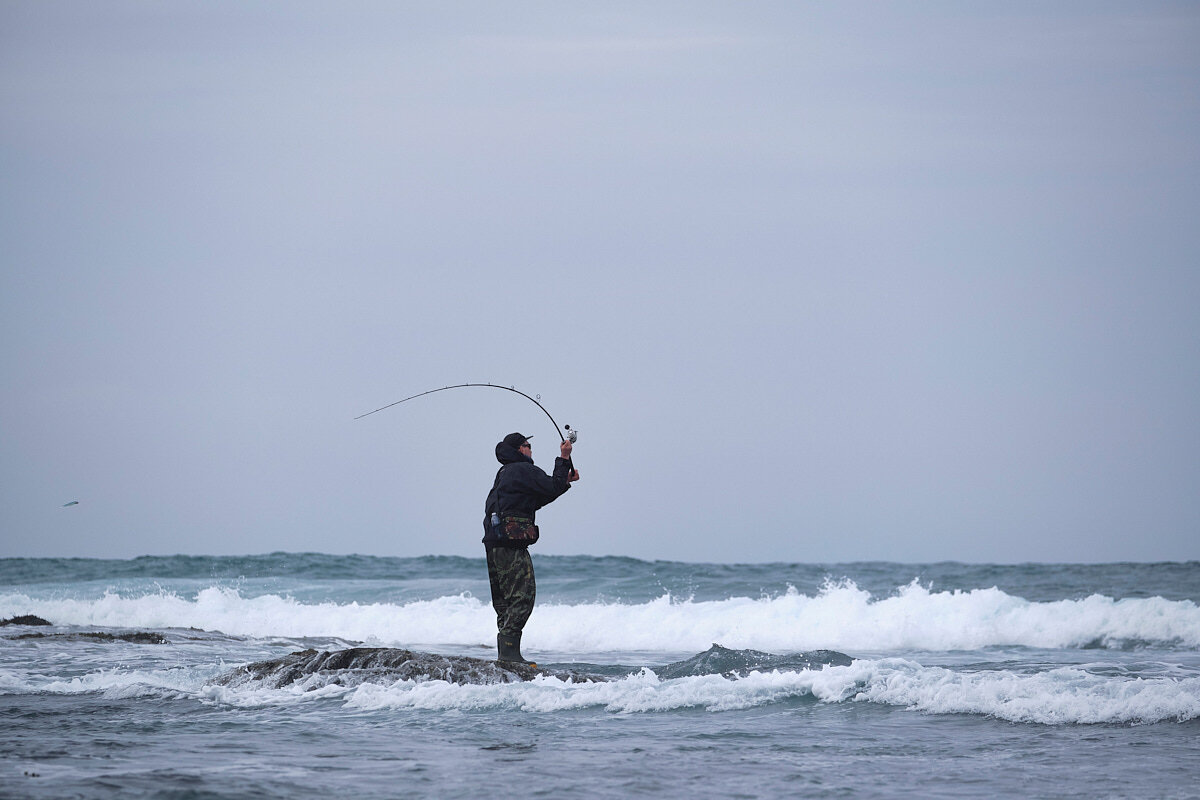
All that power, the weight of the lure, the speed of the cast, yet the rod soaks up the almost unnatural looking contortions with consummate ease - which of course begs the question which I always find myself asking. If a rod can bend this much in a cast without your mainline or leader knot and so on snapping, where on earth does this fear of putting a proper bend in a fishing rod to fight fish hard come from? Are you telling me that there is a bass swimming in our waters which could possibly put a lure rod through any more grief than Charlie was putting his Smith Dragonbait Seabass 11' 40-100g yesterday? Fighting fish is obviously different to casting lures, but the rod still bends doing both, and I could go through my library here of many thousands of bass fishing photos and I bet you I can’t find a single photo where anybody is bending their rod into a bass anywhere near as much as Charlie is bending it in a simple cast as per above………………
Disclosure - If you buy anything using links found around my website, I may make a commission. It doesn’t cost you anymore to buy via these affiliate links - and please feel entirely free not to do so of course - but it will help me to continue producing content. Thank you.