
Why do we like Fuji guides so much? Is it purely because they seem to be on most rods? Surely there are some good alternatives?
I am going to hazard a guess here that the majority of fishing rods which many of us here might buy are going to be finished with some sort of Fuji guide or rod ring (I’m going to call them guides because it’s easier), plus there’s every chance the handle and grips are also made by Fuji. I know squat about the company Fuji, but almost unknowingly I bet you that most of us have used a whole heap of their components and feel very comfortable indeed when we see that Fuji guides label attached to our new fishing rod. I know I do.
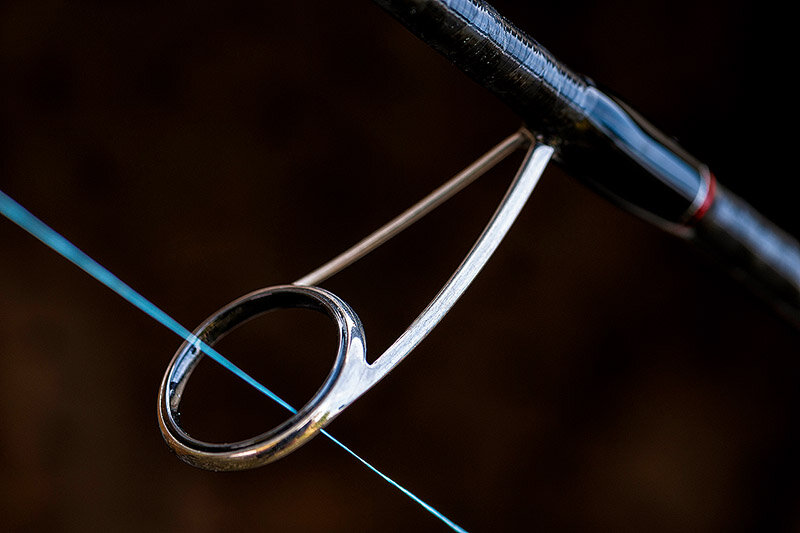
And I do like a lure rod rung with those expensive Fuji Torzite guides as much as the next tart, but when you dial down into it, what are we getting for the bump in price that Torzites create? Are my lures going out any further? Does my braid last longer because of the super duper lining to the guide? Are the actual guides themselves lasting longer than other guides because of how they are made? Are they considerably lighter than cheaper guides? Fuji says this on their website: “Fuji Torzite Rod Guides are ultra thin, stronger, with an improved shape, lower friction, and 40% lighter and smoother than SiC. All in all the best material”. I see no reason to disagree by the way.
One thing I do know is that I have yet to find a single bit of damage or rust on any lure rod I have used and/or owned that is rung with Fuji Torzites. Note that I wash my rods with a hose after use, but even so after a decent amount of time I would expect to see some discoloration at least on the more regular Fuji guides which we have all most likely used so much. I can’t recall a crack in any of the linings inside the guides, but then I can’t actually recall much if any damage to any guides on my lure rods over the years. I know it happens and I have seen the result of it which is damage to one’s mainline, but I guess I have got lucky on this front.
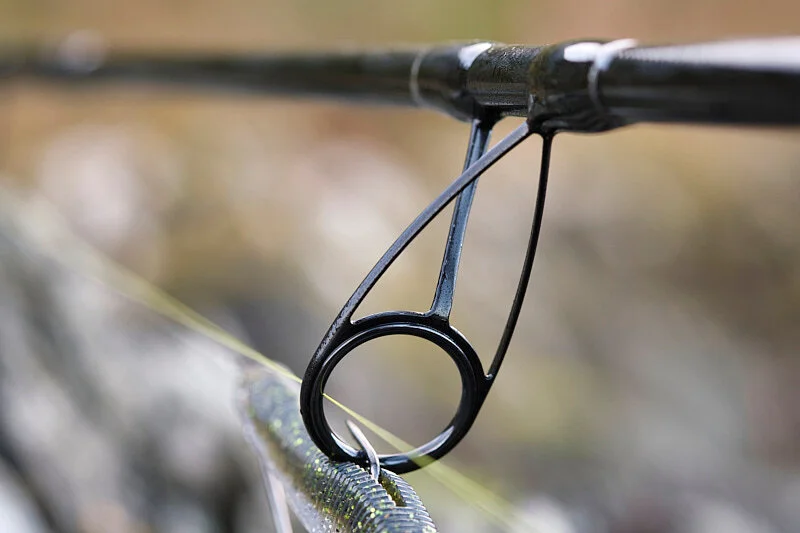
Anyway, for reasons that will become far clearer around the end of May, for a fair while now I have had the chance to compare and contrast certain lure rods which are rung a bit differently. Some use the lovely Fuji Torzite guides, and some use these CCS Guides as per above from a company called SeaGuide. I can’t recall having any meaningful time with a lure rod using these CCS guides from SeaGuide until I stumbled across those rather lovely two £100 DAM Effzett Intenze Spin rods, the 9’ 7-28g and the 9’ 14-42g (reviews here), and whilst I can’t pretend that the guides alone made much of an impression on me as a kind of standout feature, the rods themselves are so impressive that the fact they aren’t using some sort of Fuji guides which I am so used to didn’t bother me for a single second. I just liked the rods whatever guides they had on them.

I do wonder if we are almost hardwired into wanting to see that Fuji label on a fishing rod we might buy, when in fact there are plenty of very good guides out there which are not made by Fuji. Being able to compare and contrast some specific lure rods using slightly different guides made by two different companies is an interesting thing to do, and whilst I’ll take a set of Torzites all day long if I can, I can’t help but notice how well my braid feels like it’s going out through a rod using the CCS guides from SeaGuide. It’s going out great with the Torzites of course - that was never an issue - indeed any lure rod I have used which uses any kind of Fuji guides has never been an issue on that front, but I do like how things feel with these CCS guides. I have never measured a lure cast and I don’t intend to start doing so, but I have a bit of an inkling. There is so much that I want to tell you about here but I can’t yet - more to come for sure……….
Disclosure - If you buy anything using links found around my website, I may make a commission. It doesn’t cost you anymore to buy via these affiliate links - and please feel entirely free not to do so of course - but it will help me to continue producing content. Thank you.