
Surface lures and how they grip or don’t grip so well in bouncy conditions - is the Patchinko still the king?
I can’t pretend that it doesn’t niggle me how an expensive surface lure like the original Patchinko II could perhaps be a bit better made when I compare it to other lures of a similar price, but the simple fact is that it’s a frigging killer of a bass lure which continues to catch a lot of bass for a lot of anglers. Catch it right and it casts a mile, it’s obviously got an action that appeals to bass of all sizes, they are not remotely cheap, I don’t think the hooks are up to that much over time, but I wouldn’t be without them. I have four rather battered Patchinko II surface lures here that have all had their hooks replaced, and on two of them the internals have rusted up so badly nothing moves or rattles any more. This seems to affect how well they cast but to be fair they have been bashed against a lot of rocks and caught plenty of bass. At times I can find an argument for the newer and better made Patchinko 125 perhaps being a slightly better surface lure again than its bigger brother, but when you really need to get a surface lure out there in some relatively hostile conditions, it’s still the Patchinko II that I turn to.
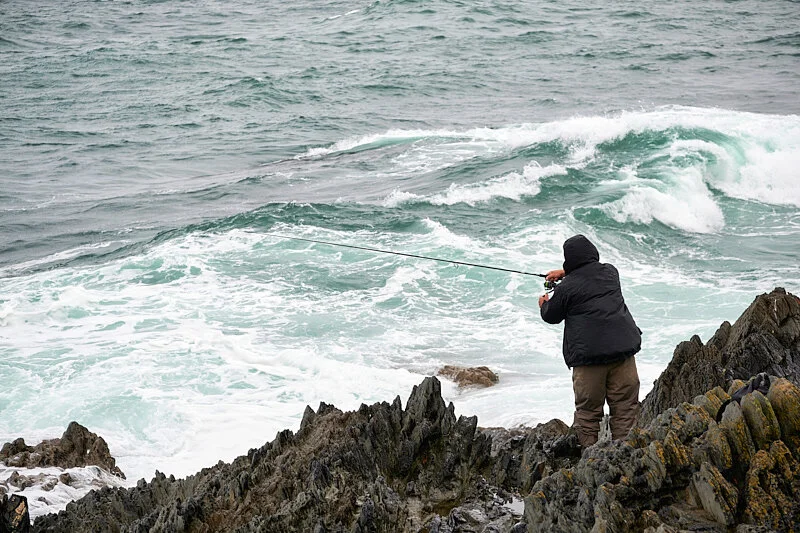
I was out fishing a while back in some bouncy conditions and via trying a few different lures out I got to thinking about how certain surface lures deal much better with lively seas than others. I understand that different surface lure designs lend themselves a bit better to specific sea conditions, and like with a regular diving hard lure such as my beloved IMA Hound 125F Glide, it’s noticeable how some surface lures “grip” the surface of a lively sea better than others and help me keep that tight line to the lure to be able to work it properly. I guess it’s a combination of that slight “cup” style of pencil popper face and a heavy rear end on the Patchinko II that keeps it fishing so efficiently in rougher seas, and via playing around with some different surface lure the other day, it was interesting how I could not maintain a tight line to certain lures which obviously aren’t designed for what I was trying to put them through. A lot of bass anglers don’t fish surface lures in rougher conditions so I need to bear this in mind as well.
Via my doing some work with Savage Gear I have played around a bit with the newer versions of their Sandeel Surf Walker surface lures. These newer versions are rigged with seriously good treble hooks and they seem to be really well made, but they are obviously a very different lure to the Patchinko and as far as I can tell aren’t best suited to bouncy seas. It’s almost ridiculous how far the Sandeel Surf Walker 155S (sinking) casts, and being a surface lure it comes straight up on top when you start working it - but it’s not “gripping” like the Patchinko II, and I can’t keep a tight line to it when there’s a decent sea running and/or a strongish side wind. I caught bass the other day on the floating Surf Walker 155F, but the sea was pretty flat and it felt like I could work the lure properly with a tight line giving me that all important direct connection to it. The floating version goes out well if you catch it right and there isn’t much of a headwind, but it’s the sinking version which seriously gets out there if needs be - better than the Patchinko II I reckon, but I still come back to the Patchinko being the surface lure which is obviously designed to cope with rougher conditions. Yes I am doing some work with Savage Gear, but with these newer Sandeel Surf Walkers I am increasingly interested in them for calmer seas and how they work so nicely in conditions like that.

Now there is obviously what I am going to diplomatically refer to as a “Patchinko tribute” in the Savage Gear surface lure lineup, the Panic Prey 135. It would be somewhat cheaper for me if this “tribute” did everything that the original Patchinko II does, but I am not about to start doing the corporate thing here and blow smoke up your proverbial. I do hear some good reports about the Savage Gear Panic Prey 135 as a bass catching surface lure, and I have given them a bit of a workout, but I just can’t get them to cast as well as the original and more expensive Patchinko II. A big thing for me with the Patchinko II is that it copes so well with the bouncier stuff and that’s why I often turn to it. There is also that Rapala “tribute”, the Rapala MaxRap Walk'n Roll, or the “Patchala” as I have nicknamed it. As seems typical of most Rapala lures I have come across it seems to be very well made, and it absolutely frigging flies. I have not given this Patchala much time because I trust the Patchinko II so much and to be honest in a working capacity I’d rather learn about more of the Savage Gear lures and what they can or cannot do - but I don’t seem to hear very much about it and it strikes that the Patchinko II is so well known and trusted here in the UK that a lot of us are prepared to pay the price in order to have them in our lure boxes. How many surface lures do you actually lose when you stop and think about it, or is that just me trying to make myself feel a bit better?

A well used Patchinko II surface lure
Disclosure - If you buy anything using links found around my website, I may make a commission. It doesn’t cost you anymore to buy via these affiliate links - and please feel entirely free not to do so of course - but it will help me to continue producing content. Thank you.