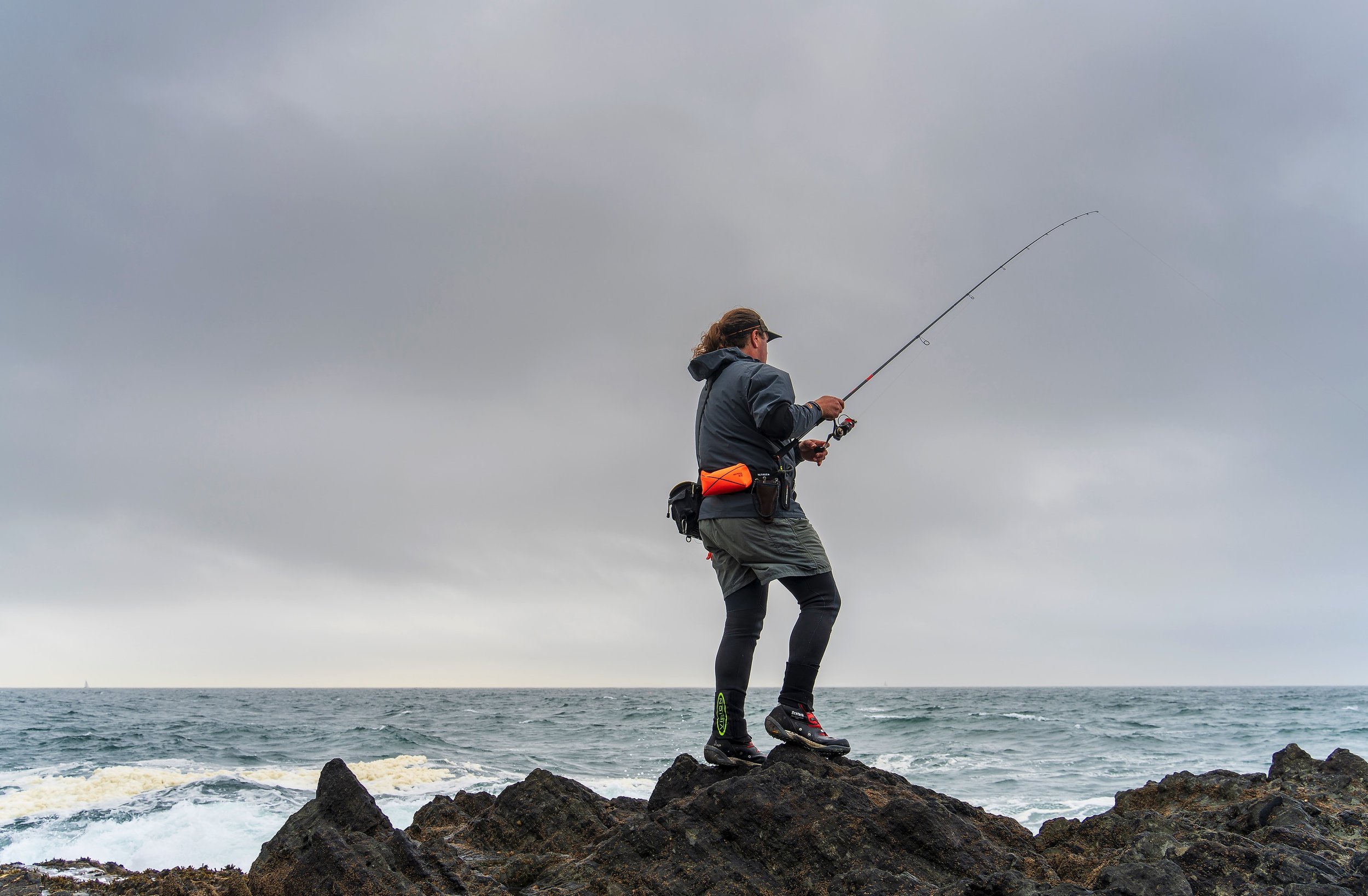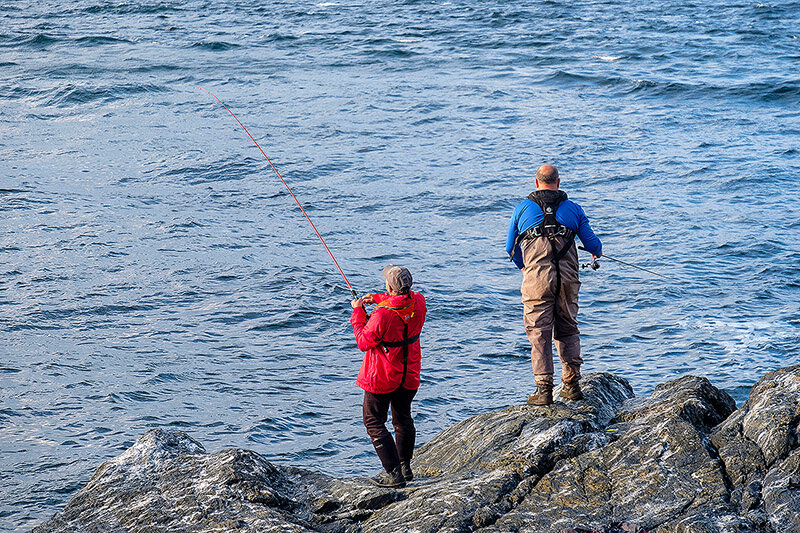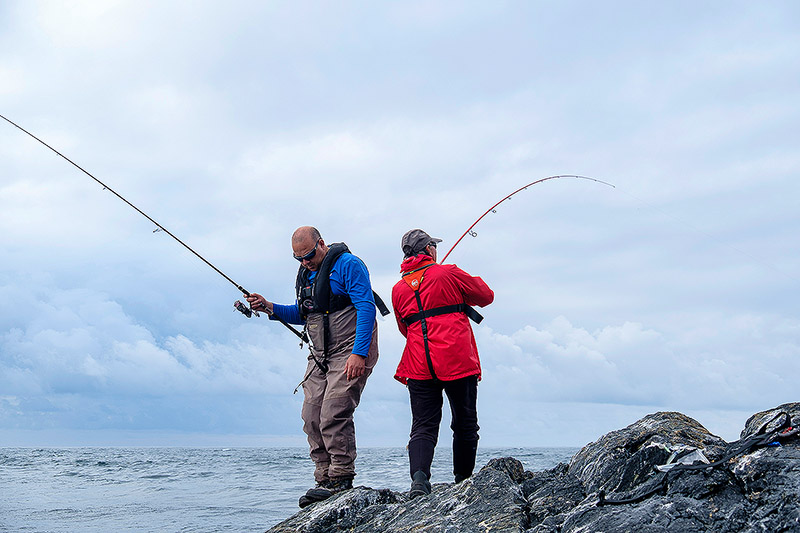
Some of the best advice I have read about planning for and then deciding whether to fish or not fish from rocks marks in rougher seas
I would imagine that if and when we are officially allowed to get back out fishing that there will be a number of us literally running to our favourite marks with a few new lures and a burning desire to get them wet and hook into a few hungry fish. I came down sick around Friday lunchtime but my antibiotics have been kicking on and I am on the mend - not coronavirus I might add - but it doesn’t bloody help that I am also and quite truthfully feeling a bit sick with frustration at not being able to go fishing when I want. The combination of cellulitis and not going fishing sickness has not been much fun over the weekend! I have loved fishing since I was seven years old and this enforced time away from it has only served to reinforce in my head how much my life is truly fishing and that life without fishing is more than strange. I hope you all had a good weekend and that you are please managing to stay as safe as possible?
So I thought I’d combine fishing safety and wanting to get out there almost regardless into a blog post this morning, or rather I am copying and pasting some words that an angler I know on the north coast put up on the WSF forum a couple of years ago. He is called Marc and he is also a serious surfer, so together with his fishing skills and knowledge of the sea I can’t really think of a better person to offer advice on better understanding factors such as tides, swell, wave periods, wind, sea states and so on when you’re planning a fishing session. Areas such as the north coast of Cornwall often have sea conditions which a lot of anglers might never really have to contend with, but it matters not - rough conditions need to be respected and thought about. Marc’s advice is properly solid and he kindly said to me a while back that I was free to put his words into a blog post. Here goes:
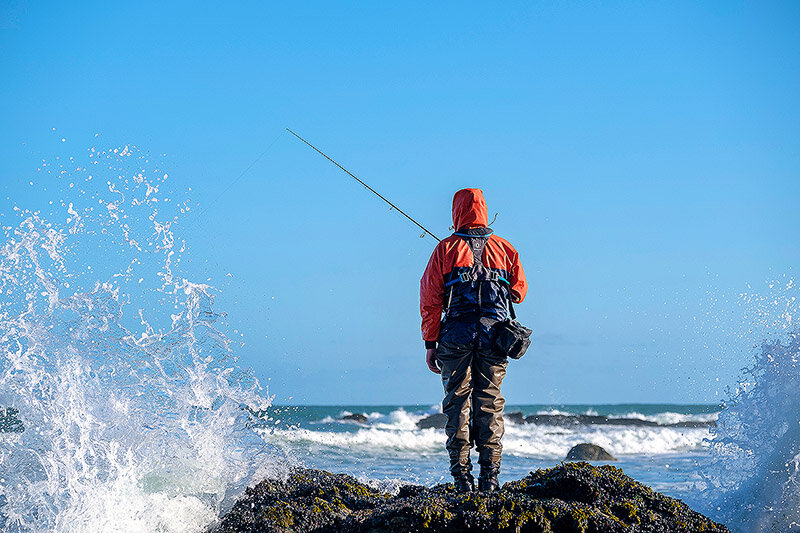
Marc: “Most of you are well aware of the dangerous nature of shore fishing especially when fishing rock marks in big seas.B ut for any newbies reading this then please take this information on board.
The day before you plan to go out check the Magic Seaweed website. Find the surf spot closest to where you intend to fish then check the surf forecast. Look at the size of the swell and the period (the seconds). The period is the important bit the longer the period i.e. 14 second the further the swell has traveled and the faster and more powerful it will be. If this long period swell is accompanied by strong onshore winds these conditions are to be avoided. The Shorter period swell i.e. 4/6 second period means it's a localised wind swell. Localised wind swell travels with less speed and power but depending on the strength of the wind (usually an onshore wind) this short period swell due to its messy unorganised nature still has the potential to catch you out.

Check the tides this is also important..look at the times and the size. The bigger the tide the faster it's going to come up or go down. The swell can influence the size and the speed the tide moves. If you're fishing a pushing tide then that seemingly safe high rock mark you’re perched on can easily be washed over by sets of waves amplified by large tidal surges so BE AWARE of what the tides are doing.
So you've done your homework...hopefully you've arrived at your chosen mark and it's picture postcard stuff, nice and easy, happy days. But it's not and you knew that it wouldn't be before you arrived right.....You've come fishing with a buddy...and you're both wearing the appropriate kit. So take your time, watch it for 10 mins..no rush. What's the swell doing, is it increasing, decreasing...what's the tide doing, coming up, going down? How safe does that mark look now...how safe will it be in half an hour. Weigh it all up.

Often with long period swells the ocean can look deceiving....It will look flat calm but then every 5 maybe 10 minutes sneaker sets or 'rogue' waves will plough through and these are often the ones that will catch people out. If you’re watching it and have any doubts then DON’T FISH, go with your gut instinct. That mark will still be there tomorrow the day after or the following weekend. Better to play it SAFE.
You've both made an educated decision and decide it looks ok... When you're on your mark even if it all looks good take any unnecessary kit off and stash it high so that you're more mobile. Work out your escape route as a precaution. If you do need to move fast make sure you know where you're going to go. Work out where and how you're going to land your fish...often those good fish will come when the oceans are lively. Most importantly when you're fishing...Keep your wits about you, stay sharp and concentrate on that horizon 100% of the time.
Number one bit of advice to really take onboard though is...If in any doubt at all, DON’T FISH....it really is that simple. Enjoy your fishing and Stay safe out there folks. Cheers Marc:)”

Things very luckily did not go badly wrong for this angler out in Morocco who got swamped by a wave that was a fair bit bigger than “normal” on that day
Thanks Marc for allowing me to reproduce your words here, and the only thing I would like to add is something very important that I have learnt about over the last few years - please wear an auto-inflate lifejacket for any fishing you might do like this. They are not expensive, they are so easy and comfortable to wear these days, and they might just save your life if something goes badly wrong.