
One species of fish with infinite possibilities, where could we be another few years down the line if anglers keep challenging what we think we know?
I know that the internet and social media especially has made fishing news as such a lot more instant and accessible, but I probably look at a lot of this stuff in a slightly different way to a lot of you here. Of course I love seeing a happy angler with a cracking fish, but what really fascinates me in terms of social media is how something like this bass lure fishing thing is evolving. I don’t think that the photography of fish or fishing has got any better with the advent of camera phones - sorry! - but I do think that you can almost chart the evolution of what I tend to think of as modern bass fishing via social media and of course a magazine like Sea Angler which I think is doing a good job of keeping on top of a rapidly changing world……………
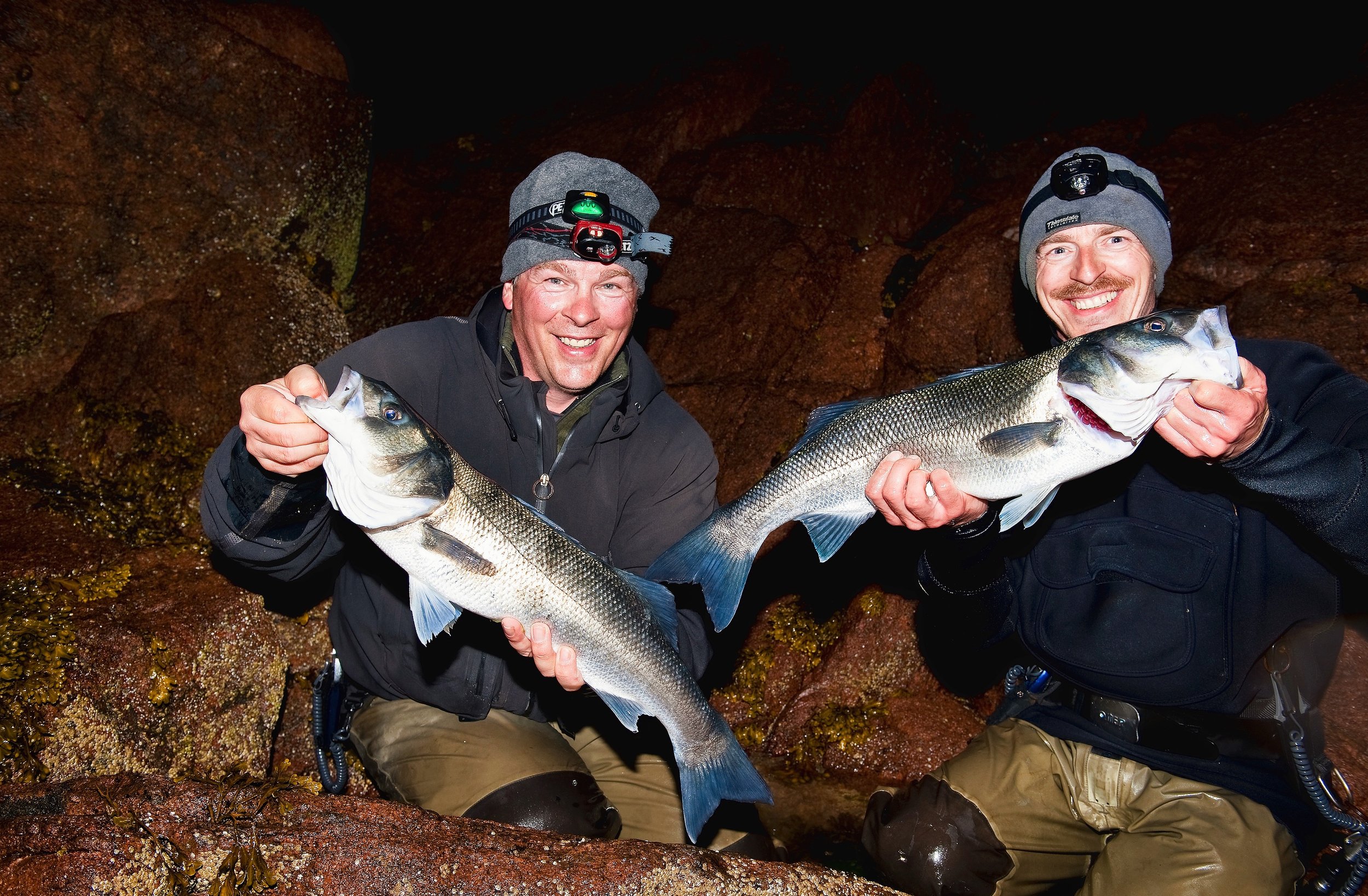
Many of you here might for example take night based lure fishing for bass as the norm these days, but it wasn’t actually very long ago when I think that very few bass anglers would deliberately go out in the dark and lure fish for bass. I would hazard a guess that some anglers will be claiming they have in fact been doing it since before they were actually born, but as with proving that wrasse are very much a lure species, I believe that a lot of this night thing becoming the norm is thanks to a couple of lads over in Jersey in the Channel Islands. For sure there had to have been some other anglers doing it back in the day, but those Jersey based anglers were the ones who chose to seriously give it a go, suss a lot things out, and then kindly share a lot of information on what they were doing. I also know that they attracted a certain amount of ridicule over the years with people literally not believing them. Look where we are now though - bass fishing with lures in the dark is the norm.
How about the development and gradual adoption of modern, long-casting, ultra-shallow diving hard lures which surely enable anglers to cover more ground in a different way? How long ago was our knowledge of anything soft plastic restricted to jelly worms on one of those horrible flying collar rigs that tangled up all the time? Lure rods have obviously moved on from salmon-style spinning rods. Mainlines have changed completely, and so on and so on.
From time to time I come across what I could refer to as a bit of fishing technique and/or type of location based snobbery for want of a better word. I don’t get it and I hate seeing it because it does fishing no good at all, but occasionally I notice something like the odd angler talking about how chasing bass in an estuary isn’t “real bass fishing”. I have tried to understand this attitude but I just can’t. I pride myself on a very open mind when it comes to fishing, and the whole point of bass fishing to me is the very fact that we have got this amazing species of fish which can be chased in so many different ways and in so many different types of locations. A lad suggested to me the other day that proper bass fishing had to be fishing on shallow reefs, but I couldn’t disagree more with this if I tried. For sure we will keep on learning about how to better fish shallow reefs, but you’re talking about a fairly typical type of location at the end of the day.
Whereas many estuaries are a potential world of opportunity because I firmly believe that in many respects we are at day two or three with our knowledge of (potentially big) bass behaviour. I have done loads of bumping soft plastics like the Fiiish Black Minnow or the MegaBass XLayer in the mouths of various estuaries on the last of the ebb - I love fishing like this, and especially because the bass can scrap so well in strong currents - but I hope that I have moved on with my knowledge of estuary based bass fishing and embraced more of it.
Yet I still know and believe that I probably haven’t really started yet with the potential that I think is there. Just look at the stuff you can see on social media from some of the forward-thinking bass anglers in France for example. Every estuary is different of course, but how far are big bass moving up certain estuaries to feed? Are we overlooking or not even thinking about loads of potential marks because with our current knowledge levels they don’t look very “bassy” to us? Do we walk away from coloured estuary water because our open coast experience says to do so? Could we effectively target a lot of ground we might usually ignore by trying different lures and techniques? Are the French estuaries really that different to some of our estuaries etc.?
I saw a post on Facebook by a lad called Will Cooper the other day (look for Will Cooper Fishing on FB and I believe Instagram as well), big thanks for letting me use your photos today), and I literally cheered here at home when I read the details and saw the photo. I have talked a bit about what I believe might be the potential for bass fishing with these creature-style lures/baits, both from what I think they can imitate and where they might help us to fish - but I have put very little time into these lures and techniques yet. I met Will at the Big One Show earlier in the year and then caught up with him again at the Pure Fishing trade event we did last week.
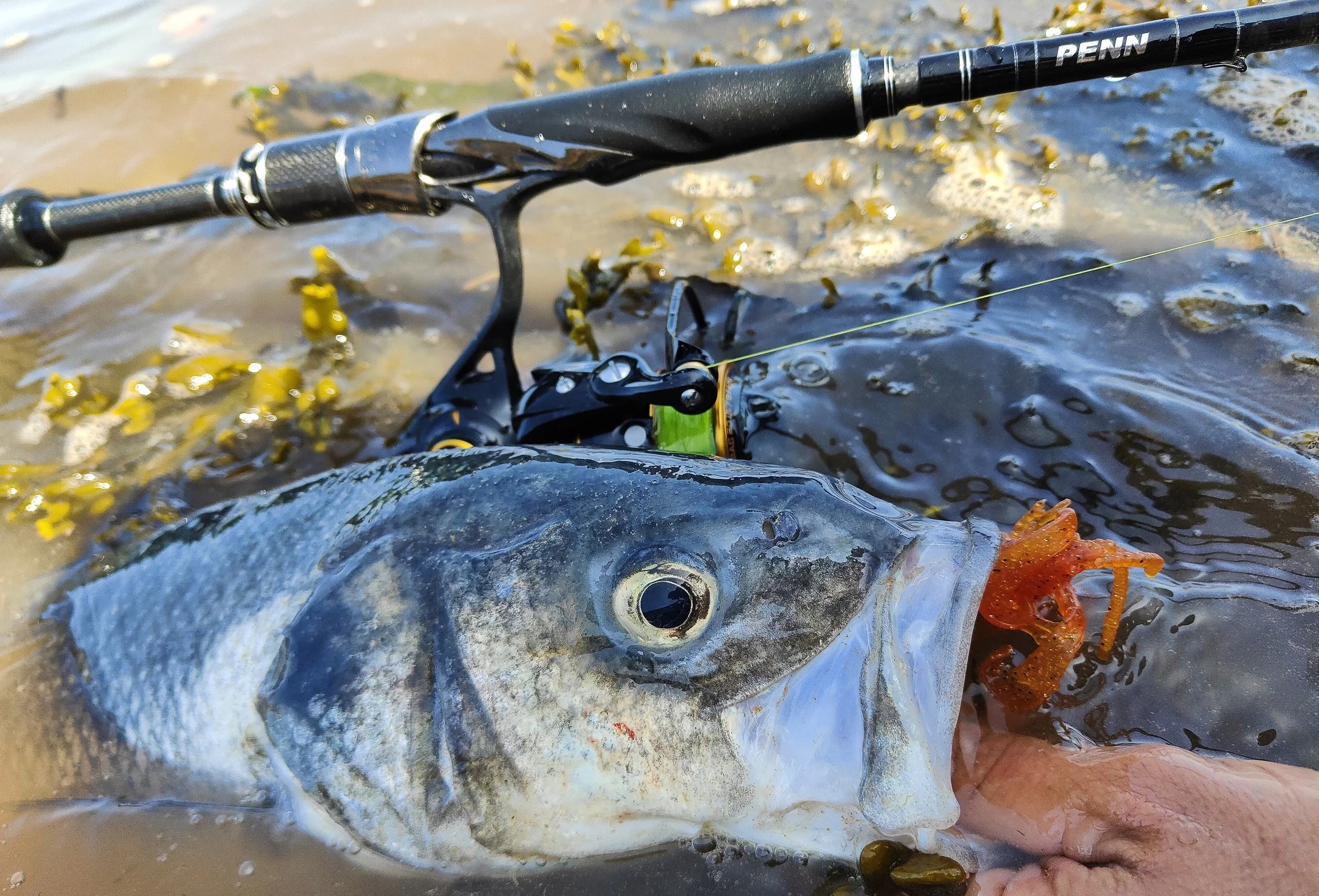
Will put his thinking cap on and decided to venture a lot further up his local estuary on the hunt for bass. As he said on the phone, it didn’t exactly look great with very small tides, very bright sunshine, and really dirty looking water as you can see from the photos here. But Will had got hold of a new rod he wanted to try out (Penn Conflict Elite 7’ 6-32g, I saw one last week, felt lovely!), and he has also got some of the really good looking Savage Gear Reaction Crayfish 9.1cm which I didn’t even know existed until he showed me them the other day. Will thought about where to go and look and it revolved around a lot of bladderwrack but very little chance of actually seeing any fish due to the lack of water clarity.
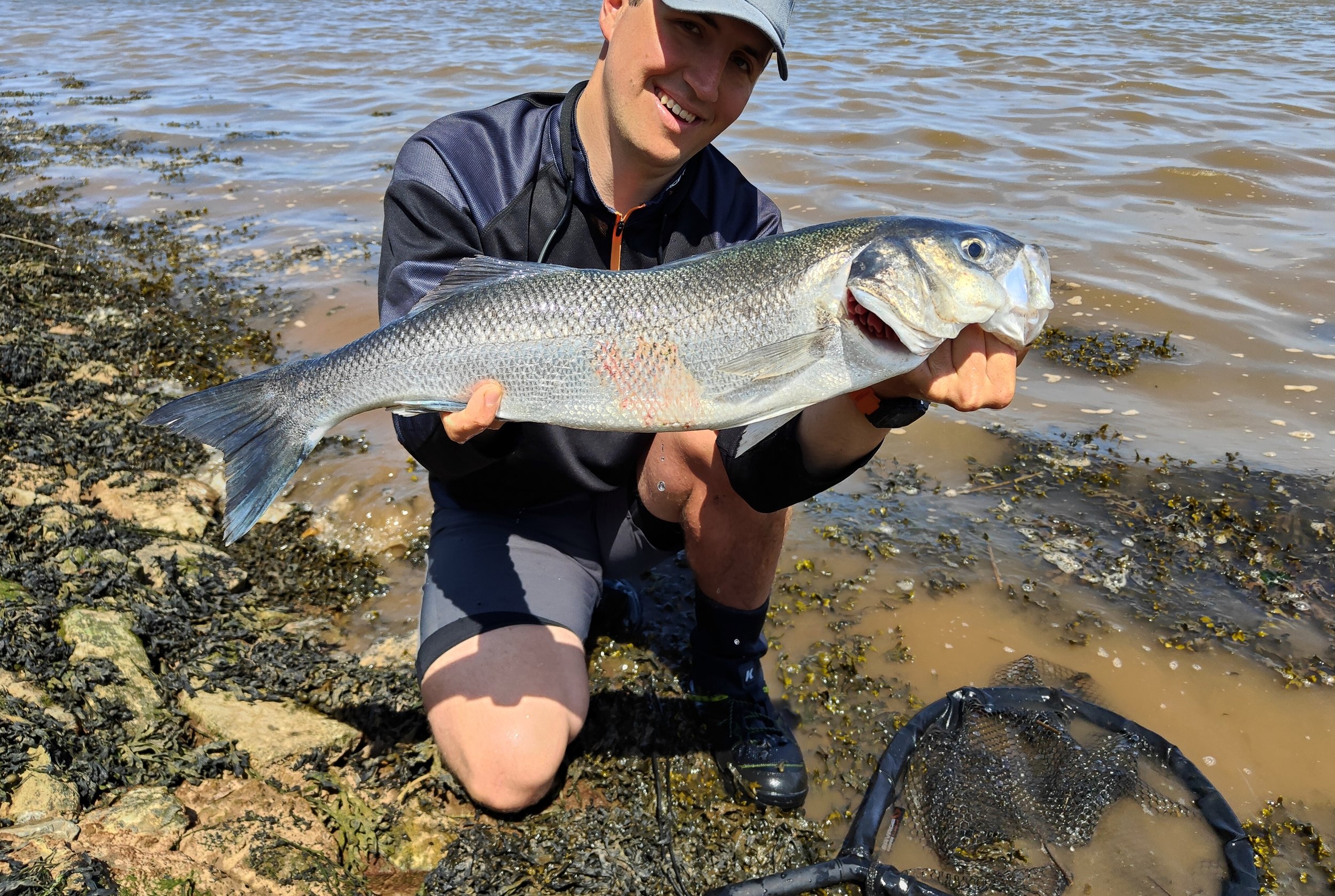
But he did what you need to do if you are going to keep progressing - he did something different to what he might do more often. He fished a type of lure on a specific rig which allowed him to target some ground in a way that I reckon was holding his lure/rig in place for long enough for this fine looking 66cms bass to locate it in less than ideal water clarity. Will used a 10g cheb weight to a weedless hook, much like the photo above, and he said the bass absolutely slammed his Savage Gear Reaction Crayfish 9.1cm creature bait.

That is what I would class as coloured water!
I am saying you would not look for or catch bass where Will nailed this fine fish, but I reckon a lot of anglers would not have gone looking where Will did, and from my own point of view I am pretty sure I’d have walked away from water clarity like that for starters. How much more have we got to learn about effectively targeting bass in estuary water like this though? Being able to have your lure effectively doing its thing at a much slower speed than something like one of the SG Gravity Sticks, is that one of the keys to catching fish like this from water like this? I very obviously do not have the answers here, but I absolutely rejoice in how much there is to one species of fish. If bass fishing with lures was little more than targeting them over open coast shallow reefs I can’t see how they would have ended up obsessing me like they do - but it’s way more than that. This is why bass fishing is so exciting to me. It’s not the size or power of the fish, it’s the whole package of understanding that if you keep an open mind you will literally be forced to keep on learning until the day you can chase these fine fish no more. You all have a good weekend and if you know any of the fishing gods then please have a word with them ‘cos we could do with losing these sodding NE winds as soon as possible…………….
Disclosure - If you buy anything using links found around my website, I may make a commission. It doesn’t cost you anymore to buy via these affiliate links - and please feel entirely free not to do so of course - but it will help me to continue producing content. Thank you.