
I’m no reel technician, but the first thing I do when my reel suddenly sounds “raspy” is oil or grease the line roller
I have no idea how long I will continue to do this blog for, but my guess is that if I am still doing it a few more years down the line and I am still reviewing fishing tackle then I will still be trying to describe just how smooth each generation of spinning reel from the likes of Daiwa and Shimano are. As smooth as butter, so smooth you almost don’t know you’re turning the handle, as smooth as a politician’s promises - and so on. You know the score if you fish with spinning reels like the Shimano Vanford or Stradic or Vanquish or Daiwa equivalents. They’re smooth!
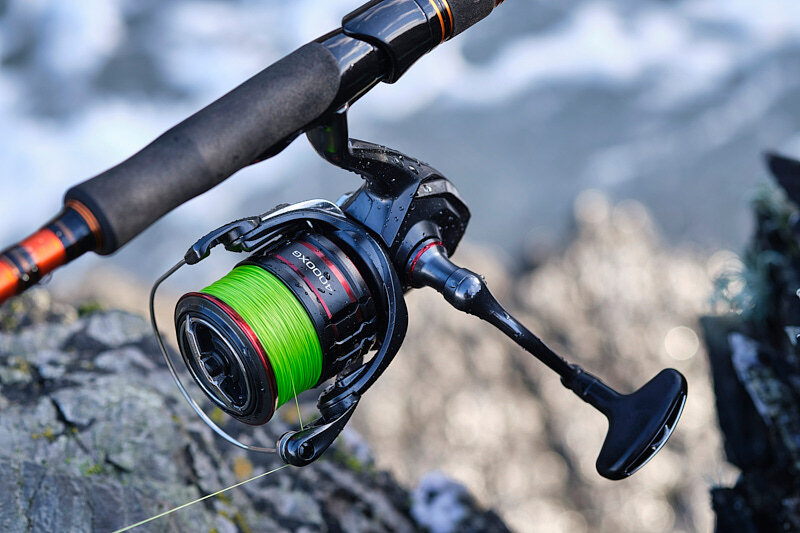
As to whether a smoother reel catches us any more fish is a moot point, but one thing that does tend to surprise me is how the big tackle companies don’t seem to engage with their buying public a bit more as regards how we might help to maintain these things to keep them running properly. As you can probably tell I am no reel technician and my DIY skill are somewhat lacking, but I use my gear hard and I like to think I know at least a little bit about maintaining it. I know very little about the new Savage Gear spinning reels for example (I have the SG8 3000H and 4000H here for a bit of a thrashing), but the reel I really want to see and I am on the list for one when they arrive is the SGS8 4000 which is intended for the saltwater world. I am squat to do with these reels and I note with interest on their website that they claim “a reel with a unique coating that easily withstood 500 hours of being sprayed with saltwater in testing”.
Now I’m not saying this is a bad thing that the body of the reel is meant to stand up to saltwater related damage, but to be perfectly honest it’s the part of a spinning reel that doesn’t really worry me. Nope, it’s the internals that I think are the really important part of a fishing reel. When I get back from fishing I will always tighten the drag right down on the spinning reel and hose the rod and reel down in freshwater, then slacken the drag off and let the outfit drip-dry. I can’t remember the last time I saw any signs of external corrosion on a spinning reel which I take out fishing, so whilst I’m not saying a good bit of body protection is not welcome, to me it’s the internals of a spinning reel which I believe get the most grief and need a bit of regular maintenance. Nothing complicated I might add, but the odd drop of oil and/or grease in a few places I believe make all the difference in the longer term.
You know when you’re out fishing and your spinning reel suddenly starts sounding a bit “raspy”? I had exactly this happen to me the other day. I was actually testing how some sample lures cast and swam and I had the invitingly smooth (not bad eh?) Shimano Vanford 4000XG spinning reel strapped to one of my SGS8 lure rods. I have linked to this spinning reel but I would like to wish anybody who actually wants to buy one the best of luck in finding one in stock! Fuel, food, fishing tackle, anybody got anything else to add to the list of stuff that is harder to get hold of these days?!
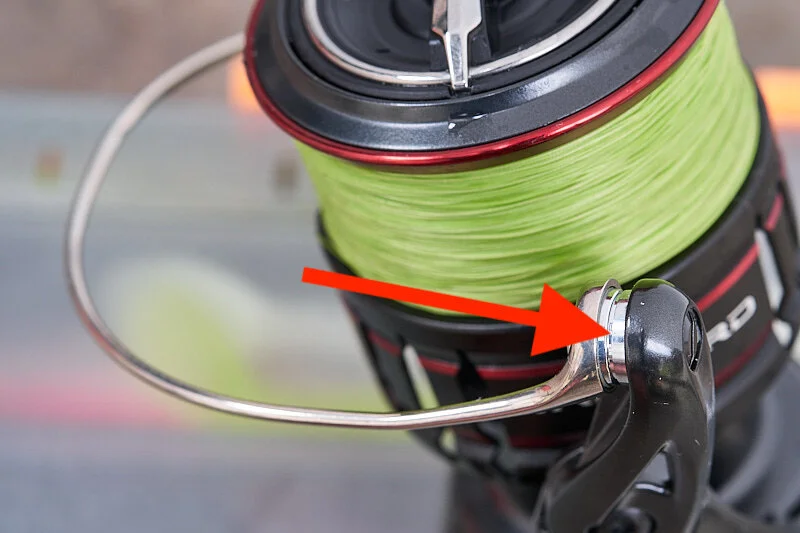
Photo 2
Anyway, so I’m banging a lure out and I’m liking how it’s casting for starters, but then out of the blue on one of the retrieves this stunning Vanford 4000XG starts to make that raspy sort of sound which I am sure most of us have heard before. I wonder how many anglers hear this sound and wonder if their lovely shiny spinning reel is suddenly a bit knackered, or do all of us here recognise that most of the time it’s simply time for a bit of TLC - and the first thing I always do when I hear that raspy sound is to get some oil or grease into that line roller area (as per Photo 2 above). I don’t think I need to be a reel expert to understand just how much saltwater is spitting around the line roller area literally all the time when you are retrieving a lure under tension, so to me it’s the obvious place to start cancelling out when you hear that raspy sound.
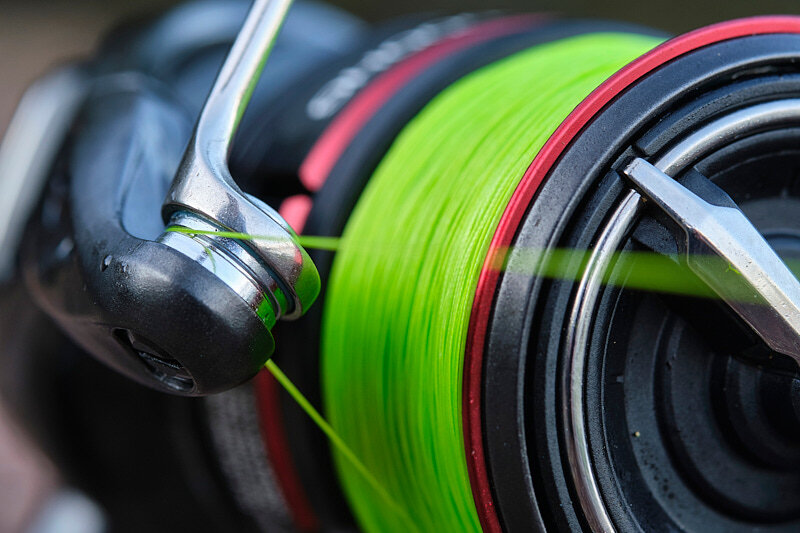
Now it could of course be the actual roller bearing inside the line roller which is knackered, but with how good so many of these modern spinning reels are I happen to think that the bits and pieces tend to last rather well. I also happen to think that a number of anglers got lulled into a slightly dodgy bit of marketing when Daiwa first started banging on about their MagSeal technology. I don’t really care what Shimano or Daiwa or Penn or indeed the new Savage Gear spinning reels claim. In my mind there’s entirely too much saltwater spitting and hissing around that line roller area for me not to be keeping a close eye on this specific part of a spinning reel and regularly maintaining it - whatever the tackle companies might claim.

Photo 1
So I got home after my bit of gear testing the other day and I hosed the rod and reel down like I usually would. When the Shimano Vanford 4000XG spinning reel looked dry I unscrewed it from the lure rod and got to work. As per Photo 1 above, this is the screw to (carefully) undo to get at the line roller. Making sure to hold the bale arm as you unscrew it (I put the tip of a finger behind the line roller you are unscrewing it), as per Photo 3 below is what comes away from the reel when you remove the screw. Within that bit of the reel sits the roller bearing and a few other little bits and pieces which I don’t really want to be taking apart unless what the maintenance I am doing right now doesn’t end up working. Hence my carefully removing the screw which holds it all together so that it stays as one complete piece if that makes sense. How many times have you tried opening a fishing reel up in the past and you suddenly hear that dreaded “ping” sound which is some vital little part of the whole thing “pinging” out from the reel and onto the floor, never to be seen again?!
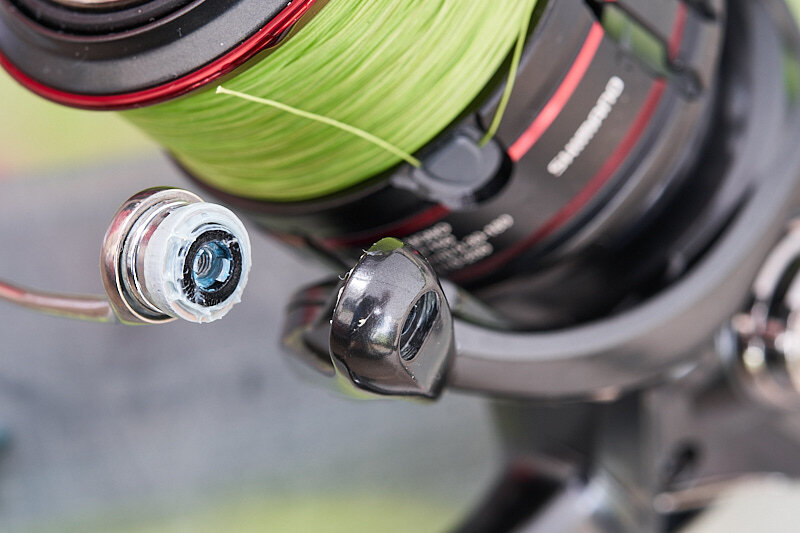
Photo 3

Photo 4
I used to simply dab some oil all over the line roller, but as I blogged about here, the newish Shimano Stradic 2500HG-FL spinning reel and how it behaved got me changing over to using a little kids paintbrush and dabbing a load of the blue coloured Penn Precision Reel Grease in there - as per Photo 4 above - and then (carefully) screwing the assembly back together. If you dab as much grease as I do in there then when you screw down tight there will be an excess of grease around the line roller area (as per Photo 5 below), so all I do is wipe off the excess grease with a cloth.

Photo 5
Then all I do is hold the reel between my thighs, run a length of some sort of cord or line under the line roller and run it back and forth a bunch of times to get things moving and I suppose help squish the grease into place (as per photo 6 below). If like me you are now hearing not even a hint of a “raspy” sound then it’s job done and our very simple bit of maintenance has done what we wanted. I have no idea if how I do things is the recommended way that a Shimano or Daiwa would suggest, but considering the lack of information we tend to get on reel maintenance and how well a lot of my gear holds up to my fishing then I am perfectly comfortable with what I can do to help keep my reels running smoothly. Please don’t take what I do as anything remotely gospel, but it works for me and I can only remember having to actually replace one line roller bearing myself on a spinning reel which was getting a good bit of use.
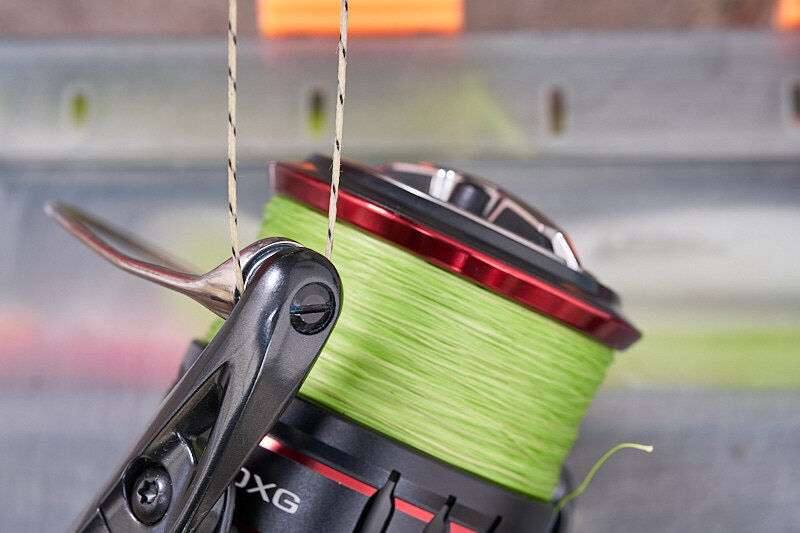
Photo 6
Disclosure - If you buy anything using links found around my website, I may make a commission. It doesn’t cost you anymore to buy via these affiliate links - and please feel entirely free not to do so of course - but it will help me to continue producing content. Thank you.