
I got some logical answers to why some hard lures don’t seem to swim quite right with single hooks
There is no point me expounding further upon my thoughts on single versus treble hooks when I dealt with this subject in a blog post from a few years ago here, but nothing has changed about my general dislike for treble hooks whilst at the same time recognising that we stick hooks in fish for our enjoyment and treble hooks on certain lures just work………….

IMA Komomo SF-130
But the one thing I did notice when I tried and tried with single hooks on many of my hard lures was that on some of the shallow-divers especially, with a simple straight retrieve it looked like some of the lures would kinda drag a bit to the side instead of tracking straight in. I could never get singles to work on the Tackle House Feed Shallow for example, and whilst I did catch bass on my beloved IMA Komomo SF-125 shallow-diver when rigged purely with singles, the lure sometimes didn’t look quite right on the retrieve with two or three decent size single hooks on it.
So I was having a video meeting with a lad in the Savage Gear organisation the other day. Markos and I are doing more and more work together and wow does he know his hard lures inside out. He is such an interesting person/angler to talk to, and it’s really interesting how he can so often take my thoughts and ideas and general fumblings and properly explain them back to me and incorporate various changes into samples if need be. I have got a whole load of hard lures samples here that we are working on and I can’t wait for them to hit the market in due course, but that aside, Markos and I got onto the subject of single hooks on hard lures. I explained what I had found and he was able to talk me through it and provide a logical explanation.

Think about how a treble hook is designed with those three hook points, and now think about how a treble hook naturally sits below the belly of your hard lure (we are not talking about the rear hook here). Nore the word “below” or “underneath” here - a treble hook is designed to be rigged on a split ring and then the water resistance for the most part forces two of the three hooks to sit parallel to the underside of the hard lure and the third hook point sits proud (pick a hard lure up and you will see what I mean). We are not talking about surface lures of course because that’s an entirely different subject with how they tend to be worked, and we are also not dealing with much bigger tuna and GT lures which might be rigged with really big and relatively heavy single hooks etc. I am talking about the sort of sub-surface hard lures that we might use for bass fishing.
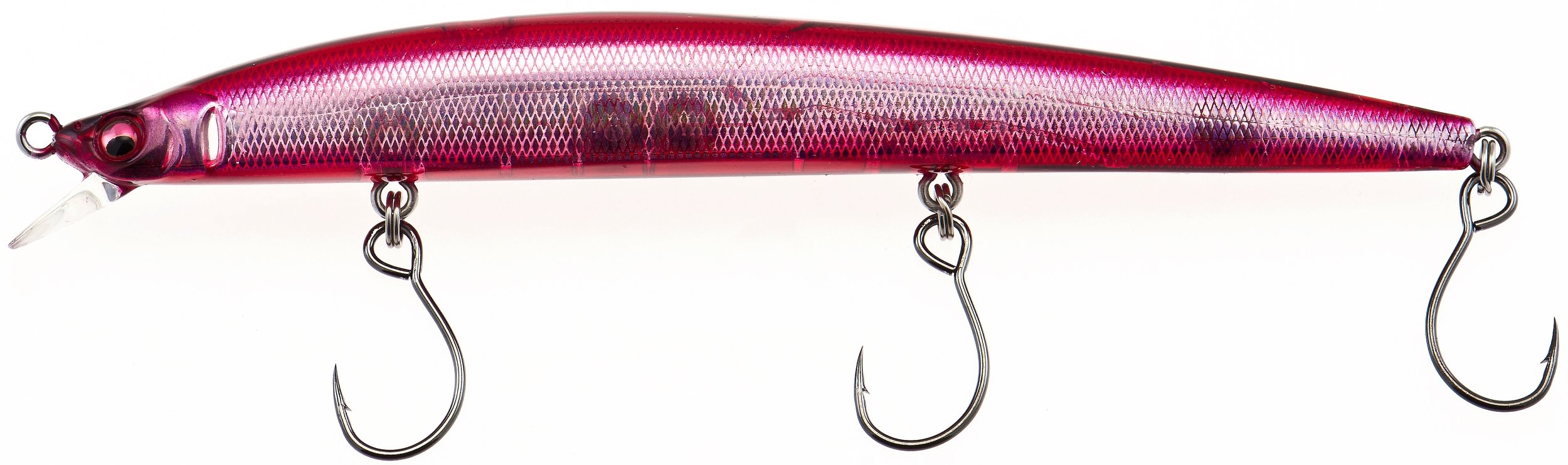
Anyway, now rig the same hard lure with a decent size 1/0 or 2/0 single hook or two on the belly, and now think about what happens when you retrieve the lure. It’s all fine when you see a photo of a hard lure with single hooks on the belly which are sitting below the belly of the lure (as per above), but now add water resistance into the mix and what does the single lure tend to want to do? Markos explained to me exactly why I had noticed that many of the hard lures I tried with singles would often want to track slightly to the side and look like they were off-balance on the retrieve. We think that the single hook is sitting below the hook on the retrieve, but what tends to happen is that the water resistance is more often than not pushing the single hook out to one side of the lure and therefore knocking it slightly off-balance. Hard lures for the most part are designed to be used with treble hooks which sit as I explained above, but now put a (single) hook or two and where they tend to move to on the retrieve on a finely balanced hard lure and the balance has changed.
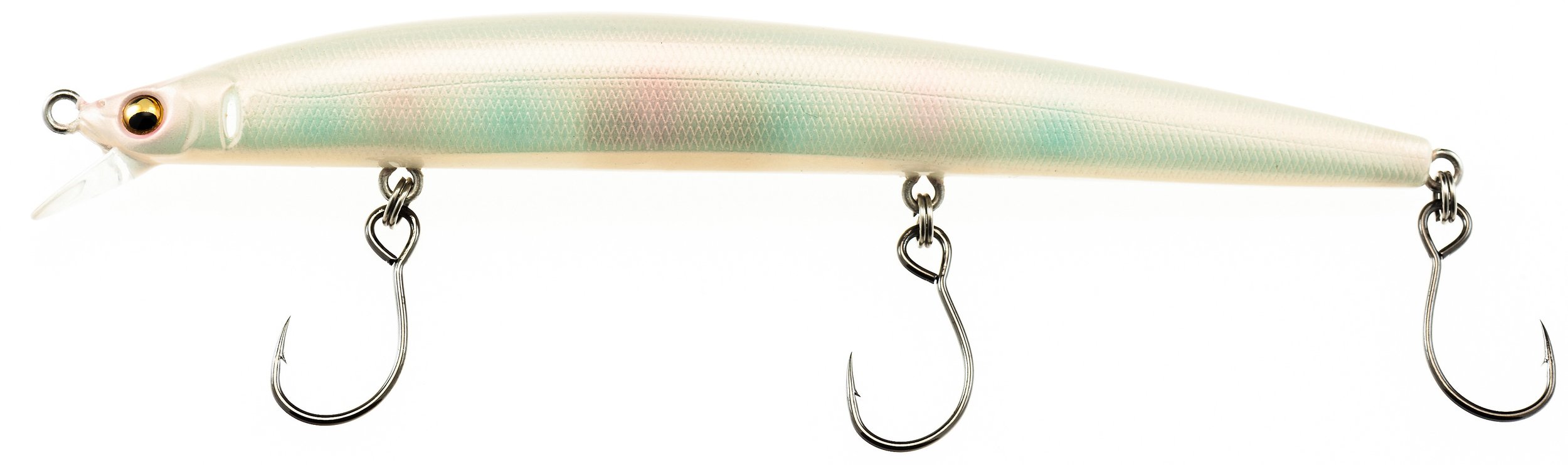
Does that make sense? I had obviously thought about things and come to various conclusions over the years, but to have it properly explained to me by an angler and lure designer who has actually done the testing was fascinating. Markos explained to me that you can get around the problem of the single hook being “pushed” to the side and affecting the balance of shallow-divers especially by using really small single hooks which because of their smaller size don’t affect the action of the lure so much, but both of us then spoke about how we had missed bass after bass when we had tried much smaller single hooks. I have such vivid memories of a particular session when we had a heap of smaller bass in front of us and I did my usual chopping and changing of lures because I have no interest in trying to be a bass numbers hero - and I missed bass after bass when I tried a couple of hard lures that I had rigged with smaller single hooks. Do any of you remember those killer MegaBass X-120 lures which were sometimes available off the shelf rigged with three rather small single hooks? (photo above) I wonder now if this was MegaBass trying to get around the problems I am talking about here?
This is not a blog post about the ethics of treble versus single hooks, but even though I only lure fish with barbless hooks, I will do all I can not to use treble hooks at night especially for example. This in turn tends to dictate the sort of lures I will turn to for the bulk of my night fishing, but that’s just fine by me because we have so many good, viable options these days. If like me you have any interest in how the fishing gear we use actually works then I hope today’s blog post has been at least a little bit interesting. It all might seem pretty obvious when you stop and think about it, but I meet a hell of a lot of people in life and fishing who just accept things as they are and don’t ask questions or try different stuff out. We are all made differently of course, but damn this fishing thing we love keeps my brain active…………
Disclosure - if you buy anything using links found in this blog post or around my website, I may make a commission. It doesn’t cost you any more to buy via these affiliate links - and please feel entirely free not to do so of course - but it will help me to continue producing content. Thank you.