
I am really starting to like this Berkley X9 braid, but the labelling is so confusing it can easily put you off using it
You know how I like a white coloured braid for my open coast lure fishing especially, so it was only natural that a few years ago I stumbled across this Berkley X9 braid in a white colour. I spooled up with some white Berkley X9 and gave it a go. I naturally went for a spool of X9 where it said “LB-Test 20lb” amongst the numerous other (confusing) specifications on the label, and I went out fishing with the stuff. Once was enough for me though because for a 20lb braid it was way too thick. As a mainline it felt lovely and smooth and a good bit more refined than something like the Berkley Sick X8 braid, but I was not going to do my UK and Irish based lure fishing with a 20lb braid that thick…………
If you went way back on this blog you would find some similar travails with Sufix 832 braid, a mainline which I still think is about the strongest and most robust I can recall lure fishing with (you should be able to find those blog posts by simply searching “Sufix 832” in the search bar at the top of the blog home page here). An incredible braid which I had initially walked away from because my first spool of Sufix 832 had come from the US and the labelling was miles out when compared to the figures we tend to use in Europe. A meeting at Rapala HQ in Finland led me back to trying the “correct” specs of Sufix 832, and I then fished with the braid for a good while and seriously loved the stuff.
So I gave the Berkley X9 braid one outing but gave up on it because it was way too thick when compared to nearly all other braids I am familiar with. I then forgot all about the stuff until I started to see a few random comments from various anglers who were raving about the line. Over time you learn to sort the wheat from the chaff when it comes to online fishing stuff, and enough random anglers were talking highly of this Berkley X9 braid. What the hell happened at my end then?
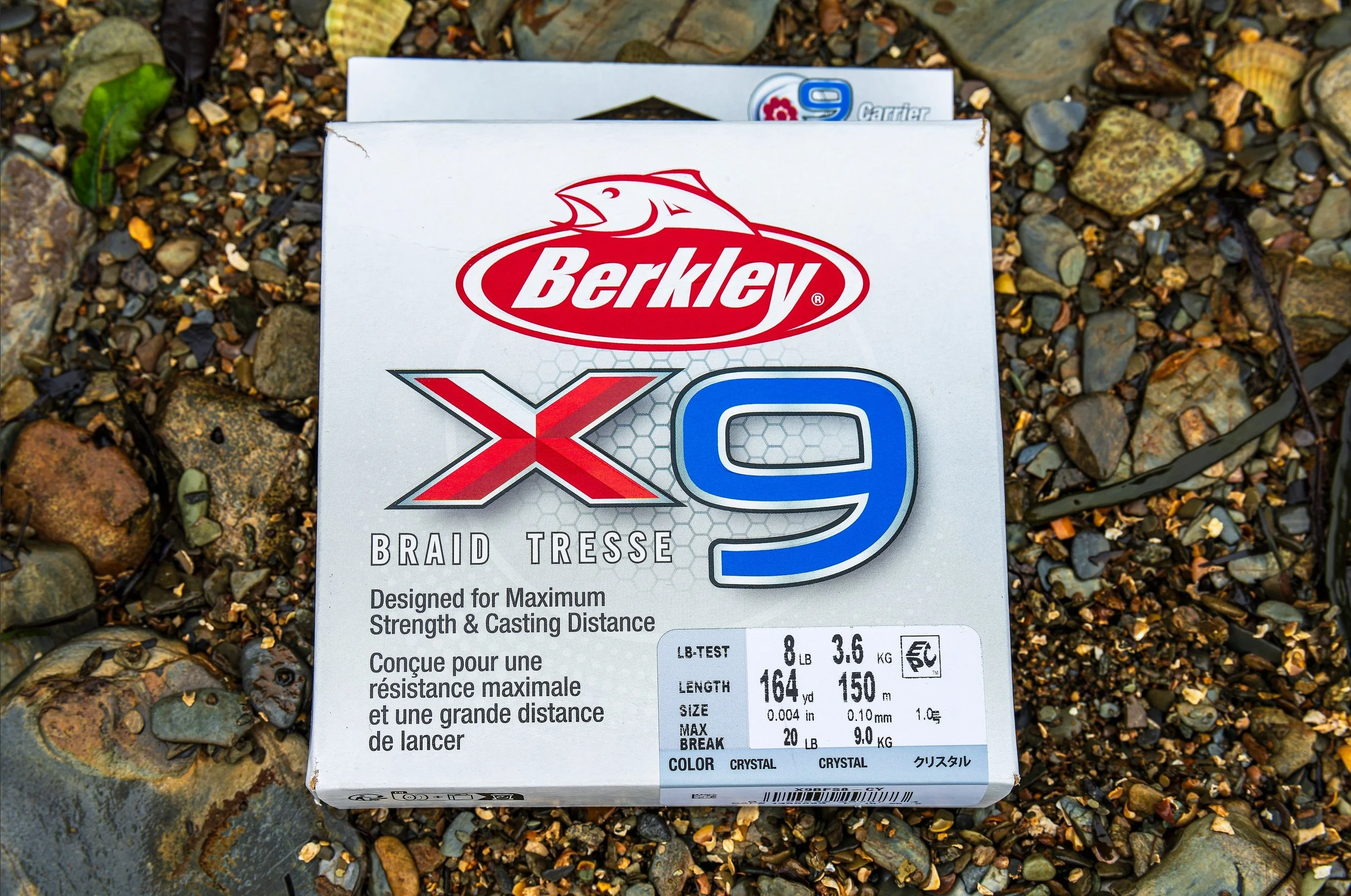
Another case of braid labelling being hugely confusing and arguably misleading as well. I work with Pure Fishing and Berkley is one of their many fishing tackle brands, but I don’t currently talk to anybody directly within Berkley so I am not remotely privy to how they make their numerous lines and how they then label them. It’s not remotely unique to Berkley, indeed it bugs the hell out of me how confusing and misleading the whole line specs and labelling system is around the whole world of fishing. But what does a line company do when they make lines for a global fishing market and different regions expect their lines to be specced and labelled in different ways? A 20lb braid in the US isn’t anything like a 20lb braid here in Europe for example. We expect thinner but the US anglers expect thicker! Stick your neck out and label a mainline “properly” - whatever that actually is - and risk not selling the stuff in a region where the anglers expect to see different specs. It’s impossible, and believe me, it’s a serious rabbit hole if you want to go down it.
I did go down the rabbit hole with this Berkley X9 braid though, mainly due to the positive feedback I was seeing online, and also because it came in white which I like so much. In due course I began to understand how to literally “translate” the labels on the Berkley X9 packets and spools. What figures to actually concentrate on so that I could get a (white) mainline around the sort of diameter/breaking strain we are more used to, so that I could then start to give this braid some real fishing time and see how it performs (I don’t need to do this by the way, in that nobody at Pure Fishing has ever asked me to fish with this mainline). I am doing this firstly because I am interested in stuff like this, secondly that I had to take note of the positive feedback, and thirdly that the prices I can find for 150m spools of this Berkley X9 braid seem to be really good when compared to other braids I know and trust.

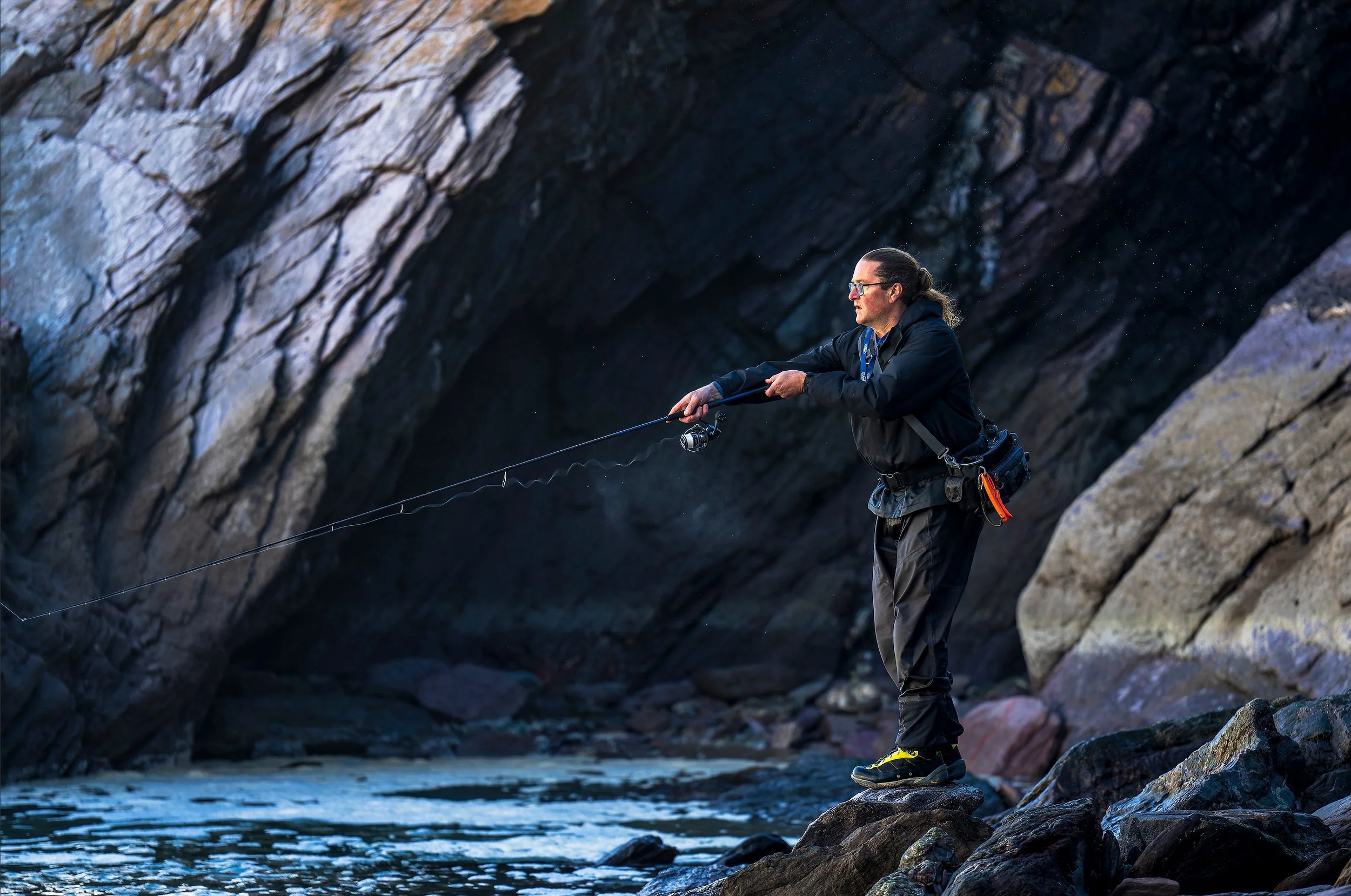
Thank you to David Trickey of Labrax Mafia for the use of this photo of me fishing with this Berkley X9 braid
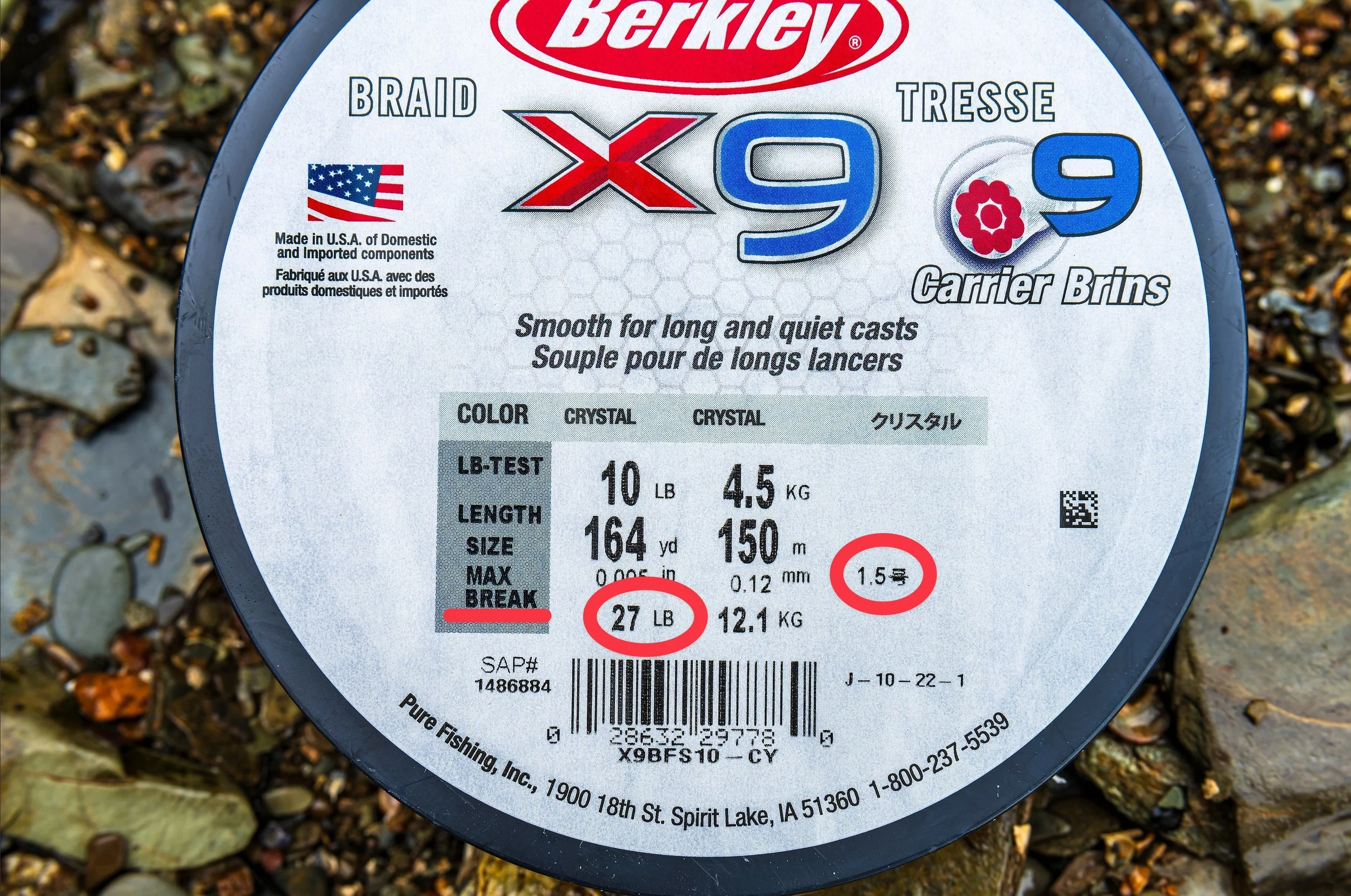
Dial down into the labelling and you will notice a bunch of different information. From my going down the rabbit hole I would urge you to ignore most of it if you fancy giving this Berkley X9 braid a go (it also comes in “Lo-Vis Green” and “Flame Green” colours if that is any help). Forget the LB-Test and diameter numbers because they are meaningless compared to what we know and expect. For us there are two main things to look at on the label - Max Break, then in very small letters, the #PE rating. The Max Break is actually what you and I would simply call the breaking strain, or Actual Breaking Strain as I have seen it referred to (i.e. it’s measured on a line machine as a straight pull on a length of the line with no knots in it, not the daft US figures which actually correspond to age-old monofilament equivalents). Take a close look at the different spools and you will note that the “Max Break” corresponds pretty much to the #PE ratings which are there but you need to look closely to see them. As I said, it’s a rabbit hole!
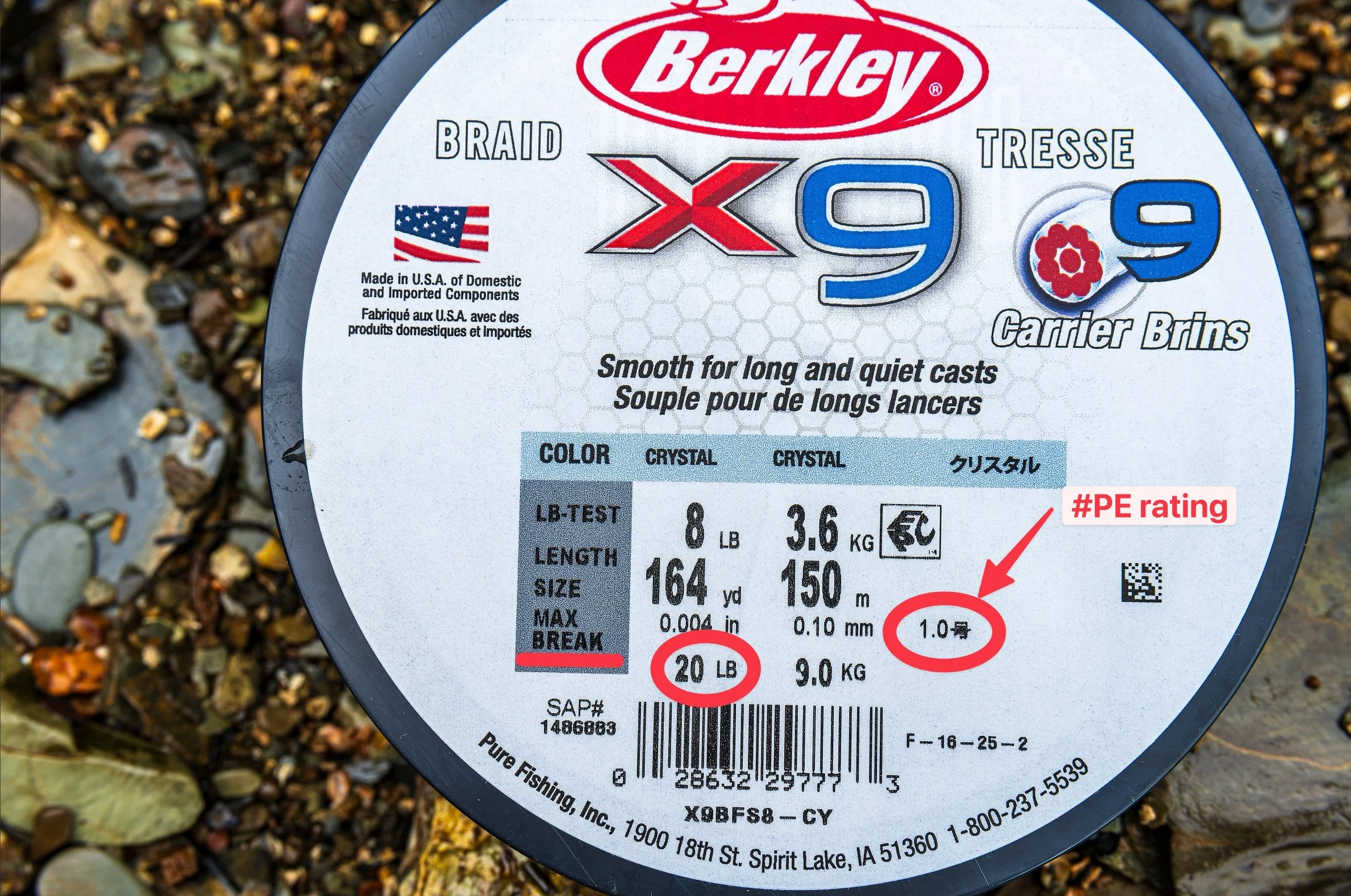
Let’s take the spools above and below then. I have these two lines loaded onto a couple of reels and they are performing flawlessly for me so far. Berkeley X9 takes the FG knot really well and it’s a very quiet braid through the rod guides. I need a lot more fishing time with this Berkley X9, but so far I think of it as having the benefits of something tough as hell like Sufix 832, but with a smoother, arguably more modern feel through the guides like the higher-end Japanese style braids a lot of us like fishing with. So far so good for me, but also this mainline highlights just how confusing it can be if you go looking for a “typical” braid to load up with. I am basically telling you that a spool of braid which most people would see labelled as an 8lb breaking strain mainline in a shop or online - not nearly strong enough for our fishing I hear you quite rightly say! - is in fact your more typical 20lb or #PE 1 mainline as we would know it.
Sorry, I really didn’t mean for this blog post to get so long, but I will leave you with a quote from my Facebook page which a lad called Kieren Faisey left. He is the owner/skipper at Unleashed Fishing Charters down in Penzance (tuna!), and he also does a lot of fishing for serious fish overseas. I don’t know Kieran well, but I know enough about him to trust what he says about fishing tackle. This was his comment about this Berkley X9 braid which he put up on a post of mine on Facebook: “Berkeley X9 particularly the white is hands down my favourite braid across the board, this is in regards to home or aboard, I’ve recently started to use it on my UK bass outfits too - I’ve used Tasline for years too and X9 white is as good as the same from my experience over many years of use, but at a fraction of the price. Reason I love the white and have noticed this over time with travelling over seas, excessive exposure to intense light, high salinity water, drying, using, drying using etc… and when using braids for the likes of Slow Pitch Jigging in the tropics where your braid is fished to its extreme limits on big tropics fish, is that the white I haven’t seen perish and become brittle like that of other coloured/multicoloured braids and from various brands in these same scenarios/exposure. Practically all I will use on my set ups where I know they are getting pushed to their limits is X9 and hasn’t ever made me question it! … I was using a Daiwa Saltiga multi braid in Panama years back, and randomly became brittle, caused me to lose 3 trophy fish in 1 day - that was me finished on that. I do quite like the Spiderwire Stealth Smooth multicoloured braid, that’s held up well for me for a while now”. I find his thoughts on the use of white braid very interesting………….
Disclosure - If you buy anything using links found around my website, I may make a commission. It doesn’t cost you anymore to buy via these affiliate links - and please feel entirely free not to do so of course - but it will help me to continue producing content. Thank you.