
Do you ever wonder how often bass might refuse our lures, and if they do, is it because we might not be effectively imitating what the bass are actually feeding on?
It’s bloody exciting to get what most of us call a “follow” when we’re lure fishing - as the lure gets closer you spot a bass following but not hitting your lure and it’s a mixture of wildly frustrating and incredibly exciting to actually see a fish doing its thing. Even better of course if the bass suddenly smashes into your lure, but those rare times when you see a bass follow without committing obviously gets the heart pumping. Follows completely and utterly fry my brain though, because my immediate thought tends to be along these lines - I’ve seen the one fish follow and not commit only because the bass came close enough for me to spot it in the water, but how many times are bass following and not committing when I can’t see what is going on out there, which let’s be honest is most of the time with this kind of fishing.
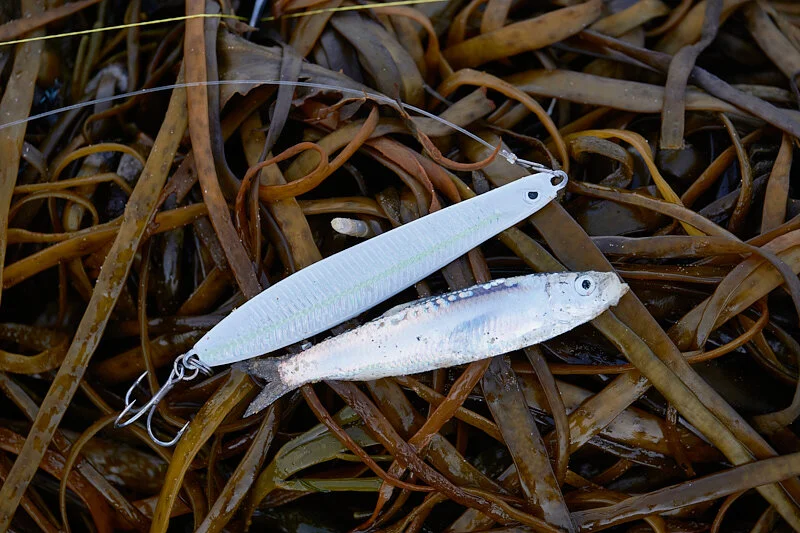
Yes I know that many predatory fish will sometimes shoal together and hit almost anything you cast at them, and I am sure it’s a competition, “if you don’t get to the food first you go hungry”, survival kind of thing. I also accept completely that we sometimes catch bass on lures which to our human eyes look nothing like any of the food sources we believe that our bass might feed upon. But when our lures are out there and doing their thing and there aren’t loads of angry, competitive bass, how often are the fish seeing but refusing our offerings? How often do you thrash the water to a foam with a certain lure you have the utmost confidence in because you have nailed loads of bass on it before, but it ain’t working this time, so you change to a very different lure and bang, you hook a bass your very first cast with it?
“Match the hatch” is a mantra you will hear a lot in fly fishing circles, but how much thought do you really give to heading out and trying to imitate specific bait species when chasing bass? Yep, damn right, this lockdown is messing with the fishing part of my brain! I don’t subscribe to the “big lures for big bass” because I have seen so many big bass caught on small to medium size hard and soft lures and I look at the things which I think bass tend to consume when they are inshore and I don’t see stuff that I would term “big”, but really, what do I actually know about what bass are feeding on and when, and how often am I out fishing and I am loving my choice of lure but the bass could be swimming around and laughing at me for getting it so wrong?
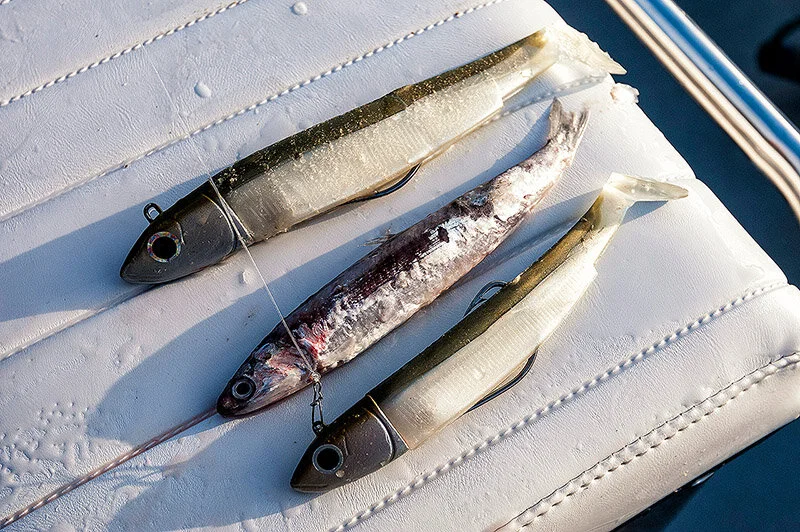
Anyway, rather than me waffle on here - you know I can - I thought it would be interesting to pull some quotes from a similar question I asked on my Facebook page yesterday. Social media quite rightly gets a hard time when it’s used improperly, but I do like Facebook especially when I ask a proper fishing related question and plenty of anglers come on and leave their thoughts and feedback in a reasoned way that lends itself to a good discussion (thank you!). Here are some of those thoughts from a bunch of different anglers, and I reckon it makes for some really interesting reading:
“My mate George often fishes black minnows on the drift in the boat at varying depths/speeds-- he has hours of camera footage ( he has an inline water camera ). the amount of fish that approach the lure and refuse it, is mind blowing ( including the number of species )” - Pete Glazzard
“One style of angling I do uses very cheap softs. Now these lures look nothing like sandeels. We know the sandeels are where we fish, hence why we fish there. We all use the same method, but all different lures, but some will catch and some won't, even if we use the exact same colour, size and make lure. I tend to think that if it's close enough to a bass, and it slightly resembles something edible, they will hit it.” - Neil Thompson
“I’ve always thought as with all “predators “ i don’t think it always about exactly replicating what they are feeding on it’s having the ability to trigger their “attack “ mode , I’ve caught pike on imitations that Are nothing at all like any bait fish in the water” - Joe Keating
“this is an interesting post that very much go on the "match the hatch" theory. It's one I strongly believe in under the right circumstances. Although I've little in the way of bass fishing experiance I can tell you about both trout and zander fishing. Firstly trout, sometimes trout are opportunist and take a wide selection of food sources, it is probably why universal flies like the gold ribbed hares ear work so well. However on occasions such as a large hatch trout really switch on to a particular food source. A big hatch of mayfly being a good example. So much so I've cast a nymph at rising fish and failed to connect to a single one. They don't spook but just fail to see the fly as they are that focused on mayflies. Even floating leaves will be taken with gusto over a nymph. They simply can't see the wood for the trees. I've found Zander the same. Fished with live baits and had takes where fish are half hitting the bait or just taking the tail off. Scale the bait up or down to match the hatch provides almost instant results. The size of bait changes from session to session but getting "the" size is all important.” - Darren Randall (great to get input from anglers who fly fish, thank you!)
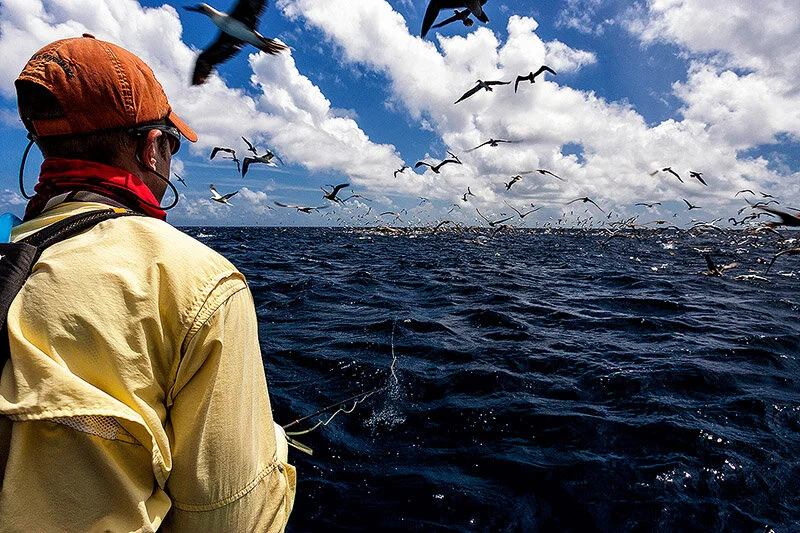
Is there any better sight in fishing that birds and fish going loopy on bait?
“Not lure fishing but a livebait usually fish live launce and catch plenty for the day on my boat but one particular day there wasn't a lot about but plenty of sprats so get them in The livebait tank aswell .whilst fishing the eels under a float on the drift there wasn't a lot happening very poor ..grabbed a sprat chucked him out within seconds the float was under fish after fish pollock bass and garfish tried an eel again nothing carried on with the sprats and had a fantastic day just goes to show once they are on a certain food chuck what you want at them to no avail” - Graham Precious
“It’s certainly true when they’re preoccupied with feeding on a single shoal such as sprats or sardines but bass are opportunistic feeders when there are no bait shoals about and especially the large ones which will often take bait/lures that are in theory out of season, in my experience... when mackerel and school bass are attacking the baby herring shoals and the gulls are diving in, I always put a big lure that imitates a mackerel and cast to the side of the disturbed water as the big bass are not joining in the feeding frenzy but are hitting the mackerel that are chasing the bait fish…” - Mark Southern
“I try and pick the brains of the commercial rod and line anglers when I see them and it gets the brain churning. I’ve witnessed them going from Skerries one day to ‘Dildo’s (big soft lure) by the box load depending on what the bass are feeding on. For them, the decision on what lure to rig and use can make the difference financially to them and it’s because of this they crave efficiency, they may be catching ok on one pattern but if another puts five times more fish on the boat they’ll want to be using that on the day. For them finding what the fish are on and exploiting it is key.” - Andy Mytton
“Constantly... As above the water wolf shows bass are curious creatures, and will investigate everything that moves. I also witness this often at night on a local river. You get looked at often. Maybe every část if you have fish in front of you. But the only times you catch every cast, is when competition is great, with large numbers of fish present.” - Robin Howard (fishing guide)
“Bass get preoccupied feeding patterns. That has been known for decades - I was out in the kayak, oh back in the early 80s, gannets were diving all around me, off the Mewstone and Gara Point area. There was an area the size of a couple of tennis courts perhaps, maybe half a football pitch, where the water was blitzing. The Redgills (old style ones) I was trolling weren't touched. Yet they were going right through the feeding frenzy. I saw the bait fish, sprat sized, possibly young pilchards. I changed to a jointed Abu Hi-Lo in bluegill, it was about 4" or 90mm long, it was hit almost immediately.. running at the same, very shallow depth. Similar refusals amongst blitzes have happened since. Match the size and shape, colour I don't think is that imporrtant, if you have a more or less natural colour... similar happened in Ireland. Fly fishing, using clousers, which are a 'banker pattern', bass crashing into a shoal of brit, they wouldn't touch my fly. I changed to a small deceiver green and white and had the best evening ever. Pic is the fly I swapped to alongside a baitfish washed up on the shore that they were hitting. Don't try to force nature, work with it.” - Simon Everett
“Matching the hatch is a phrase that rarely gets discussed outside of fly fishing in the UK; yet surely it is applicable to all forms of fishing, not just those forms using imitations, but dead and live bait fishing too. We can get hung up on imitation though. The first thing to understand is where the effort to imitate is worth it. This could be size, profile, retrieval speed, action, fall and rise rates, scent or even appearance, dependent on the species and location in which they are being targeted. It will be rare that anything more than a combination of 2 or 3 will be needed... but knowing which 2 or 3 is the key. On the flip, we can also be deceived by stories of fish being caught on practically anything and believe this means we are over thinking lures. Sure, anything can catch a bass if it catches it attention at just the right moment, but will it catch as often? It’s a topic where as you try to answer questions, it tends to just raise more.” - Grant Jones
“For me the bass seem to have 2 different feeding modes , sometimes the are maniac for fast moving metal lures such as a kilty , other times they will ignore the fast metal moving over their heads as if they are concentrating on slow moving crabs below them , is this mode a slow moving dolive usually provokes a response.” - Stephen Ryan
“I find that when the tide is really riping almost any lure is OK but when the tide is slow and bass have time to observe a lure then it's much more important to match the bait. The point is proven when lure and livebait are used at the same mark, it doesn't take a lure angler long to realise that they have to match the bait when not much tide is moving.” - Ed Hennessy
“I'd say the answer depends..... I'll use trout fishing as an example. If a trout is hungry and there isn't an abundance of one particular easy food source, it'll eat virtually anything that looks like food. However, If there is an abundant food source they often become focused on that source almost to the exclusion of everything else. I'd imagine bass are similar. If they are expecting to find sand eels, they may well ignore a mackerel.... Unless it's very hungry and there aren't many sand eels. I've seen foraging for peeling crab completely ignore blennys but later in the year, same location, watched bass foraging for blennys.” - Simon Newman
“Ok so I know you’re asking in particular about seabass in the uk. However with any predatory fish one thing I do know for certain are there are feed bites and then there are reaction bites. Sometimes a fish will bite on a lure or fly based on what they’re feeding on. Other times they would bite of lures based on territory or annoyance. I’ve had greenling and rockfish like mebaru bite solely because I was using lures to piss them off. I’ve done the same with seabass here in japan as well when it seems like a smaller beta specimen is encroaching or another species entirely like crab or something on their feeding grounds often fish respond by attacking the invasive thing. Matching the hatch is definitely important but not the end all to lure fishing. Sometimes a big lure to look like a large mouth bass will get a bite when the obvious bait that looks like a shad or craw isn’t what entices a strike. We’ve got to remember that fish don’t have arms or legs to protect their mating or feeding territory. I’ve seen some outlandish lures get bites for this reason alone. Another example is large rainbow trout shaped and colored lures getting bites from similar sized brown trout. I’ve also used bluegill shaped lures to mimic similar shaped fish feeding on smaller squid and such to get seabass to bite.” - Yoji (angler from Japan)
“I tried an experiment a while back , Two of us fishing side by side. My friend was fishing a certain surface lure very slowly the majority of the time dead sticking , I purposely tried everything in the box whilst the shoal was passing through , my friend had landed 8 bass to my 1 bass , At that point I swapped over to the same lure as him and catched him up very quickly , We ended the session 10 bass for him and 9 to me. I was desperate to find a bigger fish in the shoal or just prove to myself that the bass once on the feed would take most lures but they weren't having any of it. A very good lesson learned and that successful trip was based on the bass only really wanting that lure on that occasion.” - David McPhillips
“"Match the hatch." Probably three of the wisest words ever spoken in the history of angling.” - Rich Collins. I could not agree more.
“I’d say “match the hatch” is the way to go. A lot of my fishing is very visual, if I’m on the boat the viz is generally very good. Bass will come to the boat and often can be found under the boat chilling. I’ve had numerous occasions when they have been gorging on sandeels, normally very small ones. Yet probably the toughest days fishing I have had. Matching the hatch and going small proved most successful on numerous occasions. Yes there’s occasions when they will be feeding hard and take anything but those sessions don’t prove a lot, it’s the tough ones that make you think and show you it ain’t as easy as you think... also I’d probably say the time of year can play a part on how “hungry” and likely they are to hit anything. But even still matching the hatch in December when they are feeding on 6-9inch herrings will get me more fish. And regarding refusals/ follows I doubt most people notice how often they get refused. Sunny days in crystal clear water ain’t your classic conditions for people to fish and to see more you have to be above the water, not waist deep or stood on the beach. Sight Fishing I’ve had more takes and Interest from 4-7lb fish but the big girls sometimes don’t even blink an eye but will often follow it to my feet. Admittedly those fish possibly aren’t in a feeding state but goes to show it takes a lot more to catch the big girls than the little guys.” - Keir Sims
“Lots of great info here, my own experience is that size and silhouette are more important than colour. If you can match the hatch in every respect though then why not. Smaller Lures for me have consistently out fished larger ones. On one particular mark I fish when I'm home in Cornwall, using the small 100 patch or the 105 panic prey it can be literally a fish a cast when the bass are in there in numbers, and to be fair at times there can be literally hundreds of bass there, so no surprise perhaps to hook a few. On one of these days I swapped up to the larger sized patch not out of necessity but just out of interest, didn't get a single take. Swapped back again to the smaller size and within a few casts fish on immediately. Both lures very similar colour but one larger than the other. On days when there are not so many fish around one of the few lures that still catches there is a small toby, and often saves a blank at this particular mark. I only ever use the larger patch when it gets bumpy and in all honesty I have yet to catch a single fish on it anywhere! I have started to think that rather than a lure representing a single fish it is more representative of a general scattering or fleeing of bait fish or sandeels. The action and disturbance catches the attention of the bass but then after that the silhouette and shape have to match what they're used to, in Cornwall this is quite often sandeels. A lot of this stuff could be mark or area specific, but for me unless we're talking about pasties, smaller is better.” - Peter Ferris