
Bass fishing in SW Portugal, Part 3 - the rods, reels and lines we used, what I think has the potential to work and what didn’t
You need to bear in mind that here that I landed only two bass so it’s not as if I am trying to definitively tell you how you should go about trying to catch big bass in Portugal! What I can do though is tell you a bit about the gear we fished with and how it coped or didn’t cope with the conditions we found. I felt that when I was kinda properly fishing and holding certain types of lures in the mostly hectic conditions we got then I was in with a shout at a fish if it was meant to be, but in reality I was at day one out there. As I have said a few times now, I would strongly recommend you go nowhere near a coastline like SW Portugal for some bass fishing if you have no experience of big swells and waves and bigger sets and swell periods and so on…………….
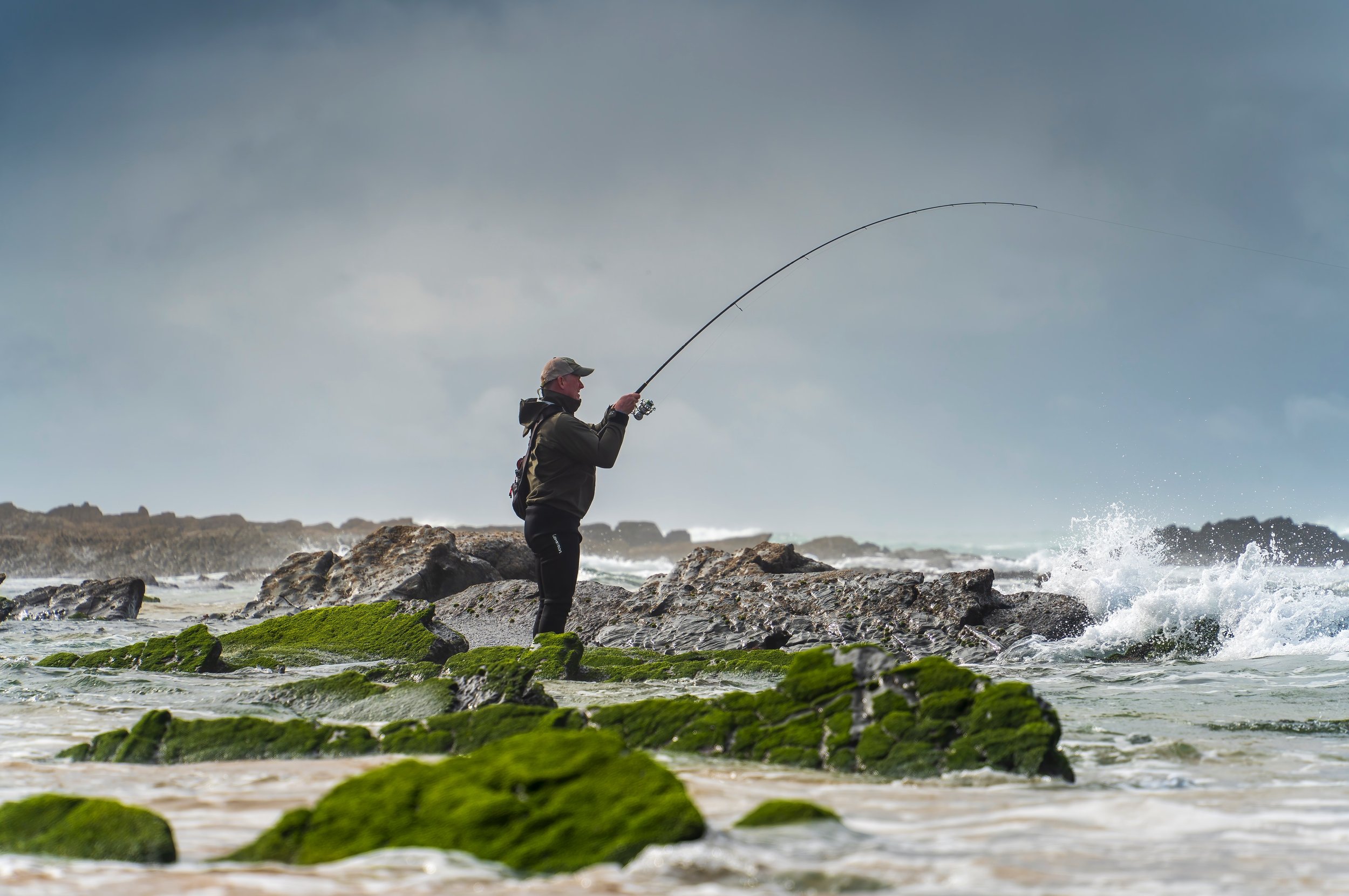
Henry who I was fishing with out there and who landed a 14lb bass off the top last January over some lovely rough ground fishes with the Daiwa Lateo Mobile 96m-4 9'6'' 10-50g travel lure rod which he bought direct from Japan a while back. I have cast this rod a fair few times and it’s bloody impressive - nice and light (149g), plenty of power to easily deal with lures up to and just over 50g, pretty good with the lighter stuff, and of course it breaks down into four pieces for easy travelling without long rod tubes.

Henry pairs this rod with a Van Staal VR50 spinning reel which he absolutely loves, and his braid is the discontinued Spiderwire Invisiline in 0.25mm diameter. In the US this was quoted as a 20lb braid but it’s done differently in Europe and I guess we’d class a braid like this as around say 35-40lbs. His leader out there is mainly the (outstanding) Seaguar Ace Hard in the 44lbs/0.52mm version. Like me, Henry carries a few different lures, but I know how much he likes the big Xorus Asturie 170 (170mm, 52g) surface lure in the Yellow back colour (get hold of Mr.Fish Jersey). He knows it works because he caught his 14lb bass on it. I had never seen this bigger Asturie and my first cast with it wasn’t very good because I didn’t get the timing at all. Get it right and it bloody flies out though! He is still out there and messaged some photos of a nice bass he had the other day on the new Shad from Samson Lures which I talked about the other day.
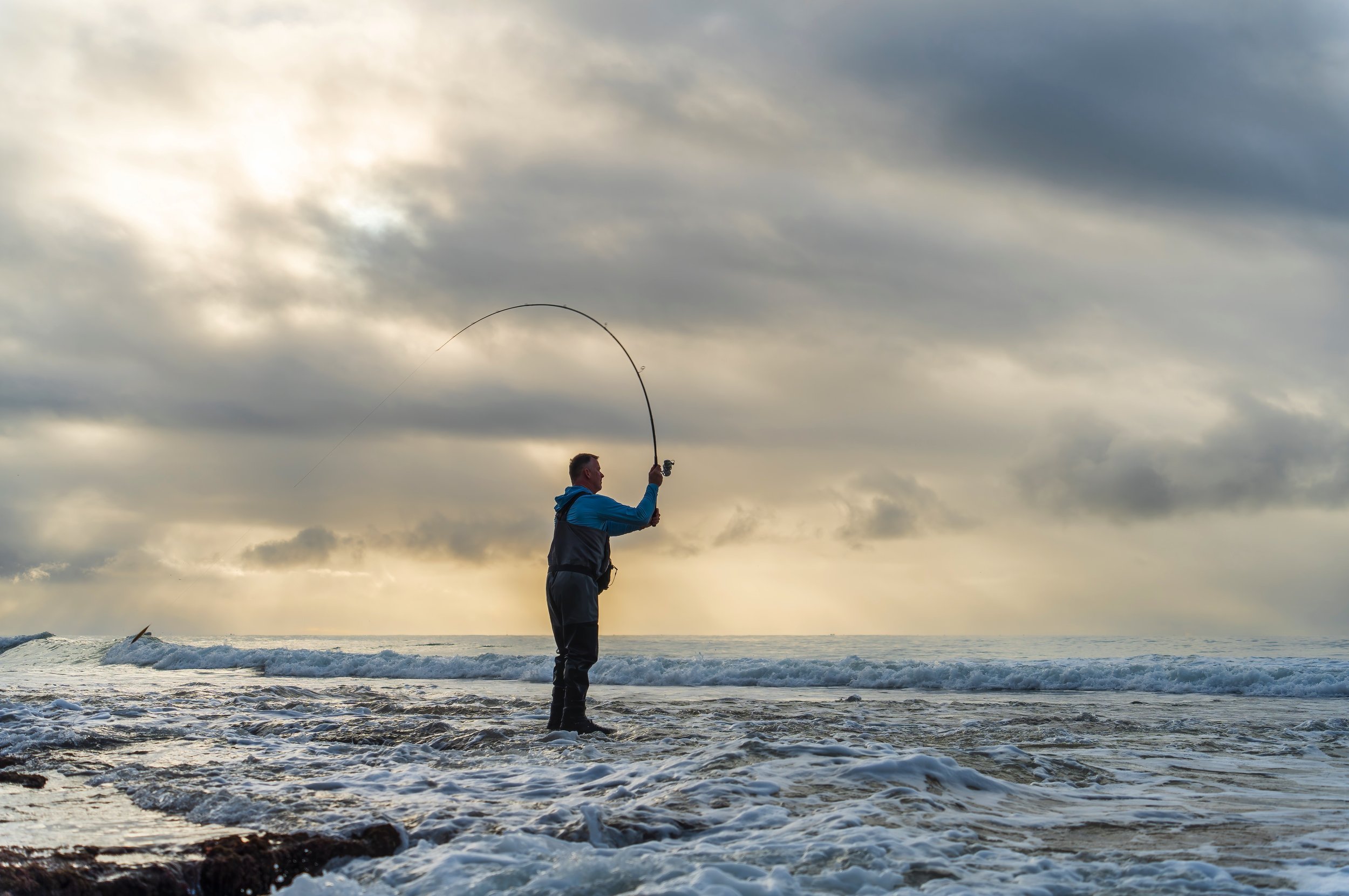
I took three different travel rods in the one cardboard tube which went in my hold bag. I fished with two of them and the one I didn’t use is a powerful 9’ prototype that I took as backup in case everything else failed. On the south coast when the water was much calmer and I didn’t need to use bigger lures all the time I turned to the very, very good but also very expensive 4-piece HTO N70 Labrax Special Travel 9’4’’ 7-42g lure rod. This is such a good lure rod, but it still niggles me that a travel-type lure rod which costs this much doesn’t come with a purpose designed tube. It was no great hassle to cut up a bit of an old cardboard rod tube to fit the three rods in, but you get my drift. That N70 puts all manner of lures out there incredibly well, and I matched it with a Penn Authority 2500 loaded up with 20lb Berkley Sick braid. On the south coast I used the Savage Gear Super Hard Fluorocarbon leader in 0.45mm and also another lower diameter which I am testing out.
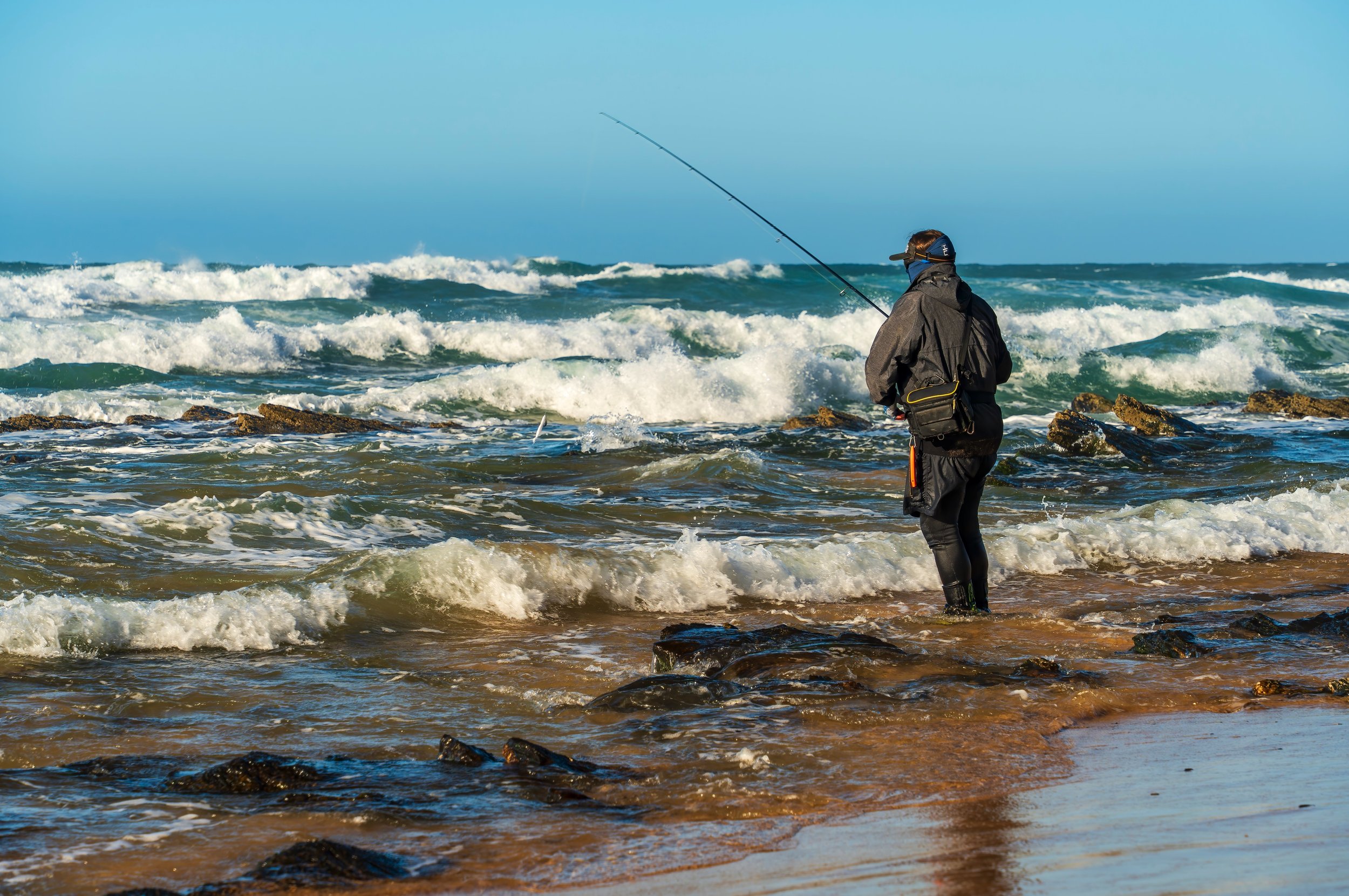
We always had enough swell on the west coast when we were there for me to want to step up to a lure rod which had the ability to fish heavier lures if need be. I can chuck a 42g lure on that stunning 4-piece HTO N70 Labrax Special Travel 9’4’’ 7-42g lure rod, but once you start getting towards the top end of a rod with bigger/larger volume hard lures especially I think you need more rod power to get such lures moving better in the cast. For the west coast fishing I turned to a very impressive 5-piece prototype travel rod which is 9’10’’ long and rated Max 60g. When this rod hits the market it’s not going to be very expensive and I thrashed the absolute living daylights out of it. I could not be more impressed and when I can I will tell you all about it. The rod performed surprisingly well with a Gravity Stick 140 Paddletail on a heavier belly-weight Berkley 7/0 weedless hook, but it really came into its own when I fished with say 25g+ lures. The rod is not as light or precise as Henry’s Daiwa travel rod but I increasingly liked it as the week went on. You could of course pay to fly with a long rod tube and take your regular 2-piece lure rods, but I was already paying for an extra hold bag and I didn’t want any further expenses.
On this prototype rod I fished with two different spinning reels because I wanted to try out a braid that I never hear anything about and I thought it might be interesting. My Penn Authority 3500 was loaded up with 36lb Berkley Sick braid, and then on a Penn Slammer 3500 DX I had some (new to me) Spiderwire Stealth Smooth X12 (Translucent) braid in 36lb. I remember the Stealth Smooth X8 very well (tough as hell, lasts forever), but without a doubt the X12 version is smoother and finer and it reminds me more of some of the much higher-end braids. I fished one day with one reel and then changed the next and so on. I do wonder if we sometimes talk a bit of crap about uber-thin braids, low as possible diameters, and filling up spinning reels as full as possible etc. My lures were frigging flying out on those slightly thicker braids, and Henry was also banging stuff out a country mile on his thicker than we might normally use braid as well.
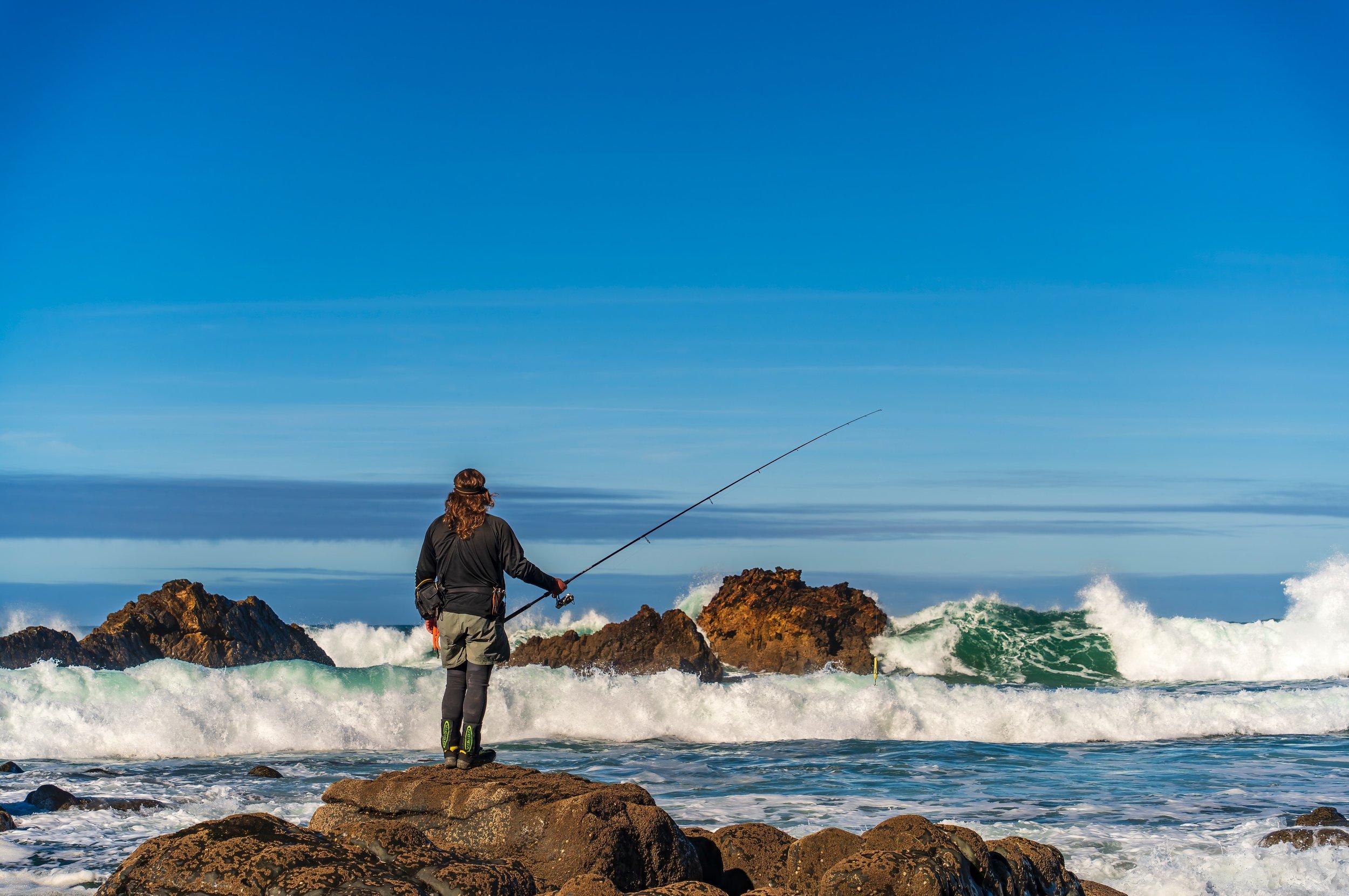
Waiting for a bit set to move through before casting. Hair by tangled.
My theory behind using a slightly thicker braid was not because of some potentially bigger bass, but because a good 20lb braid has the ability to land huge fish if the fight is “clean”. It was purely me hoping that a slightly thicker mainline might slightly improve my chances of a tight mainline (hopefully to a hooked fish!) holding out against a sharp rock. Marginal I know, but you have to try. On the west coast I used mainly the 0.45mm and 0.50mm Savage Gear Super Hard Fluorocarbon leader. I really like this stuff. We had hectic conditions with a lot of white water and I wasn’t worried about the diameter of my leader, but saying that though, it was amazing how clear the water clarity remained in some hectic seas.
I took a number of different lures but when I return I will be narrowing down my selection because I now know more than I did. I found a few of the bigger sub-surface 170mm+ DUO Tide Minnows and Daiwa Shoreline Shiners in a box here at home but I won’t be taking them out there again. I found it almost impossible to fish with the sort of diving hard lures we all use a lot because of the makeup of the ground out there. I did turn to the IMA Hound 125F Glide a few times and I can force them up relatively shallow, but yet again I come back to a better understanding of why none of the Samson Lures have a bib which would then force them to dive as you retrieve. For sure some of them are pretty heavy, but if you understand how lures like that work and you can use the angle of your rod tip and the speed of your retrieve okay then you will see how you can work some relatively heavy lures on the surface and just sub-surface if need be. It’s definitely a UK thing that we are a bit scared of a sinking surface lure for example - how can a surface lure that sinks be fished as a surface lure?! (very easily).
I also took a few different sizes of the J-hook Savage Gear Sandeel because I seriously trust these things, but as with the diving hard lures I hardly used them due to the makeup of the terrain we were mostly fishing over. For sure there are deeper gullies and holes and what have you, but for the most part we couldn’t get at them with the sea conditions, plus you’ve got endless lovely rocks sticking out of the water or sitting just below the surface which in turn create lots of eddies and rips which we know how much bass like.
I did manage to fish the 40g SG Surf Seeker and I would take some out there again, but unless you are fishing clean beaches in the surf you are generally unable to slow the lure down again because of the ground. I would urge you to go back to last week’s blog post and follow the links through to Grant’s extensive range of YouTube videos detailing how he fishes his lures. You also need to bear in mind that my opinions on the gear which worked and didn’t work for me is based on the big west coast conditions we happened to get. It isn’t always like this of course because it can and does calm off at times - but it can also get much, much bigger than we saw as well.
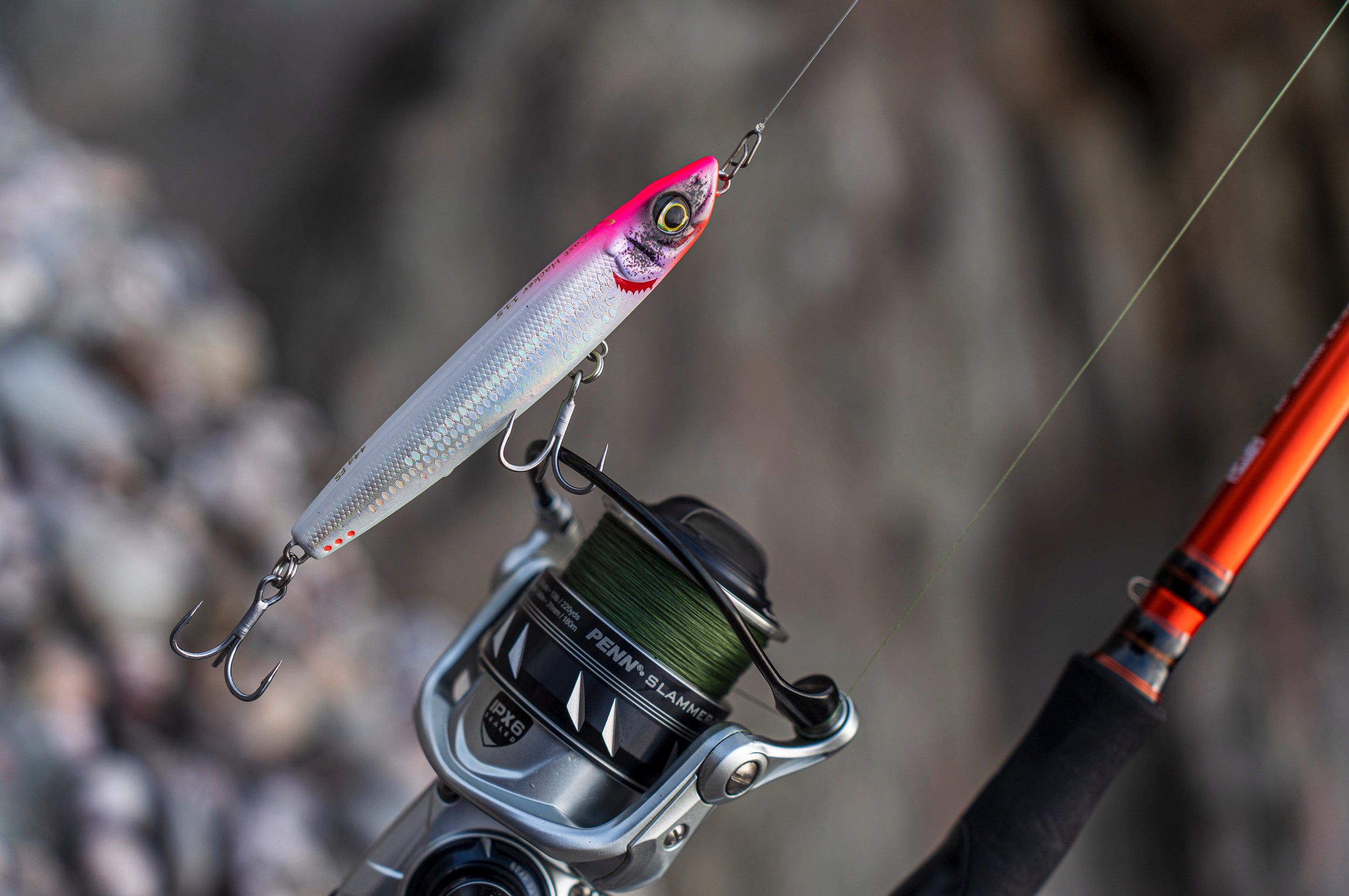
The Savage Gear Cast Hacker 11.5cm/44g
One lure I did really feel confident fishing with was the Savage Gear Cast Hacker in the 11.5cm/44g size, indeed this relatively small-profile hard lure reminds me a fair bit of how some of Grant’s lures seem to be designed to fish (there is a smaller 9.5cm version which I think has certain applications for our bass fishing). This 11.5cm/44g Cast Hacker casts really well, and on a slowish retrieve it swims with a lazy kind of slalom. You can also twitch it around a bit and it is also doing lots of good stuff on the drop. The hooks on these lures are seriously good by the way. I did lose one of these lures when I got a bit bold and allowed it to drop for a touch too long, but when I go back I will definitely take a few more of these. I am also going to test this prototype 5-piece Max 60g travel rod with the heavier Cast Hacker 11.5cm/63g to see how it copes because I can see the potential out there for this weightier version.
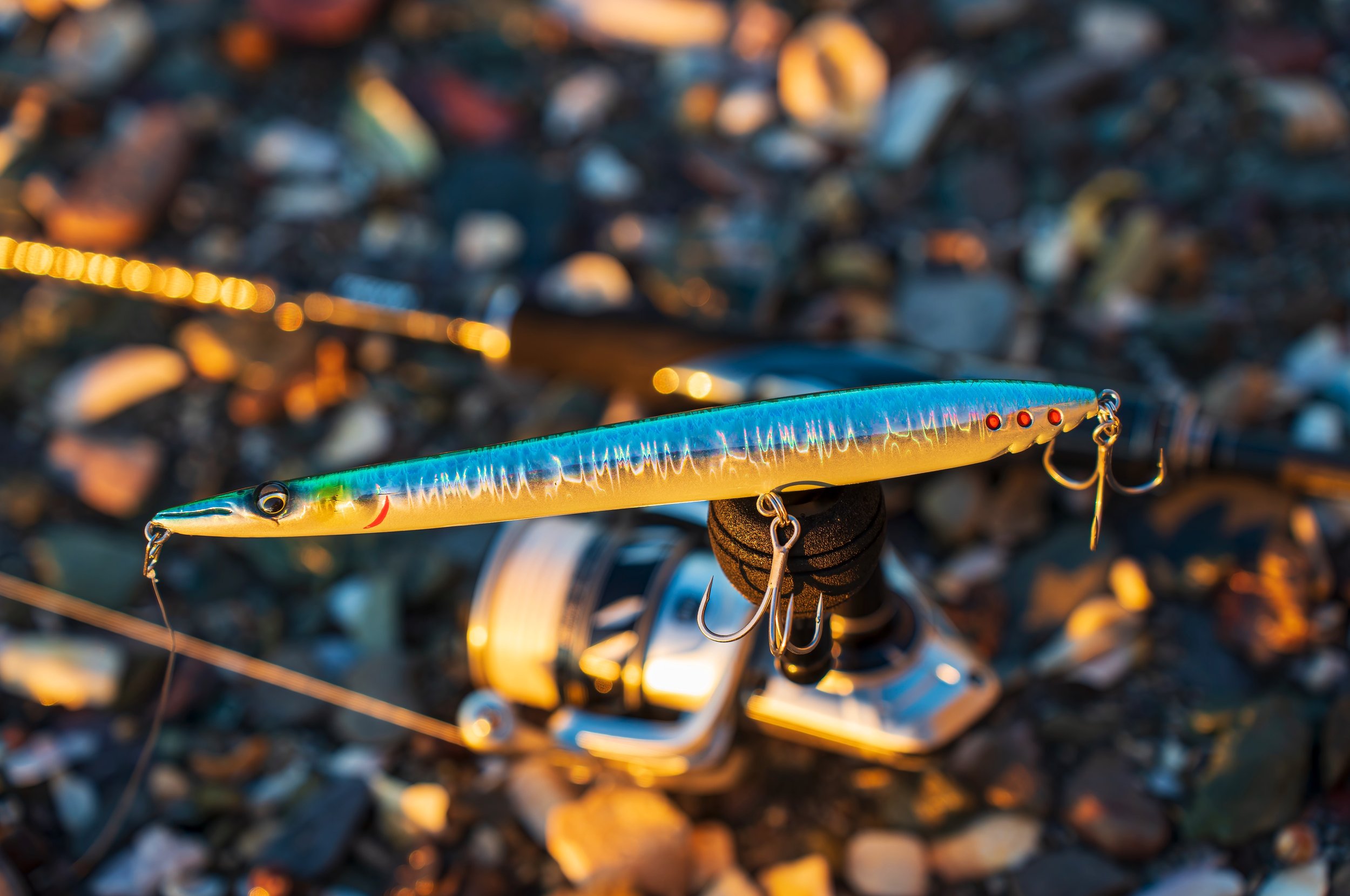
The Savage Gear Surf Walker 2.0 180mm 42g sinking version - missile!
The absolute standout lures for me were the new Savage Gear Surf Walker 2.0 surface lures (completely reworked versions of the original Sandeel Surf Walkers, miles better, they all cast so consistently now, blog post about them coming soon). I caught my only two Portuguese bass on the longest 180mm 29g Floating version, and I was fishing the heaviest 180mm 42g Sinking one a lot on the west coast in some seriously heavy conditions. It’s obscene how far the 180mm 42g Sinking Surf Walker 2.0 was going on my prototype Max 60g travel rod, and by fishing a US-style pencil popper retrieve I was able to keep the lure working in seas which would kill most surface lures I know. I would also turn to the 180mm 29g Floating version when possible and in calmer conditions we found on the south coast especially, indeed it’s pretty remarkable how subtly you can fish the big Floating version especially. I also fished with a very long casting and very stable pencil popper type surface lure around the 45g mark which I am incredibly impressed with and I think it has some serious value for our bass in bouncier conditions. On the first morning we fished a calm south coast mark and I saw a big bass come up behind my Surf Walker, track it for a while, but in then dropped out of sight. Gutted!
One pretty obvious thing about the whole lure subject needs mentioning before I finish - look at what you know works for the big bass out there. When I return I shall be buying a fair few of the Samson Lures which I detailed the other day. There is the potential out in SW Portugal to face a combination of ground and combinations the like of which I don’t come across even here in Cornwall. When a big bass does mooch along in the general vicinity I intend to be fully able to present the right kind of lure, hook her up, and then land her when the time comes.

You too could look like me, but I wouldn’t advise it!
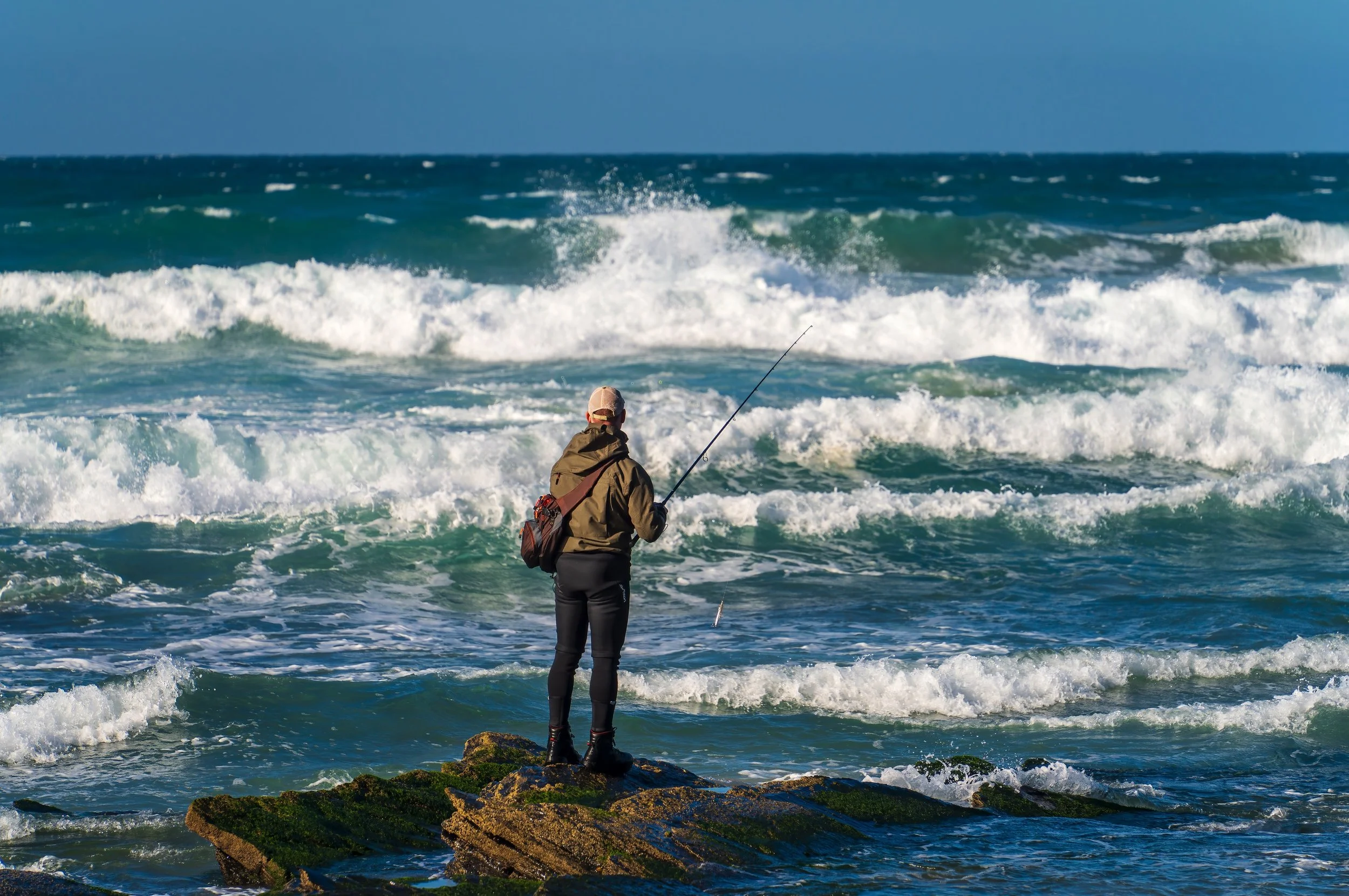
One thing that I do know is that I will not be wearing waders on the west coast especially, or at least not when there is any kind of sea running at all. Lifejacket or no lifejacket, you simply would not stand a chance. I can see them being handy for the south coast when it’s calm and quiet at night especially, but for most of the week I wore those Palm Blaze neoprene leggings and I could not have been more comfortable in them. On my feet I had a pair of those ultra-thin Bridgedale Coolmax socks underneath a pair of Palm 2mm neoprene socks. I got perhaps my last week out of my pretty much knackered but amazing Bestard Pro boots (with studs in the soles), and to keep out as much sand and grit as possible I always wrap a pair of brilliant Vision gravel guards around the top of the boots. We did a lot of walking and scrambling around and I found this to be a really good gear to wear. If I needed a waterproof top at all I used the lightweight Guy Cotten Efficient C130 Smock which I can tighten up around my neoprene leggings and basically stop my top half getting wet. As much as I can’t function without BCWs for a good deal of my fishing, I will be using the Palm Blaze neoprene leggings approach more and more here at home because it makes so much sense (full review with all my findings so far to come). Henry had got himself a pair of these cheap as chips 3mm neoprene leggings here and he could not have been happier with fishing in them. He went for one size over what he would usually take and he found them really comfortable. Anyway, so there you go, sorry it’s been a long one but it was some unique bass fishing and I can’t wait to get back out there and see if I can be less humbled next time around………………
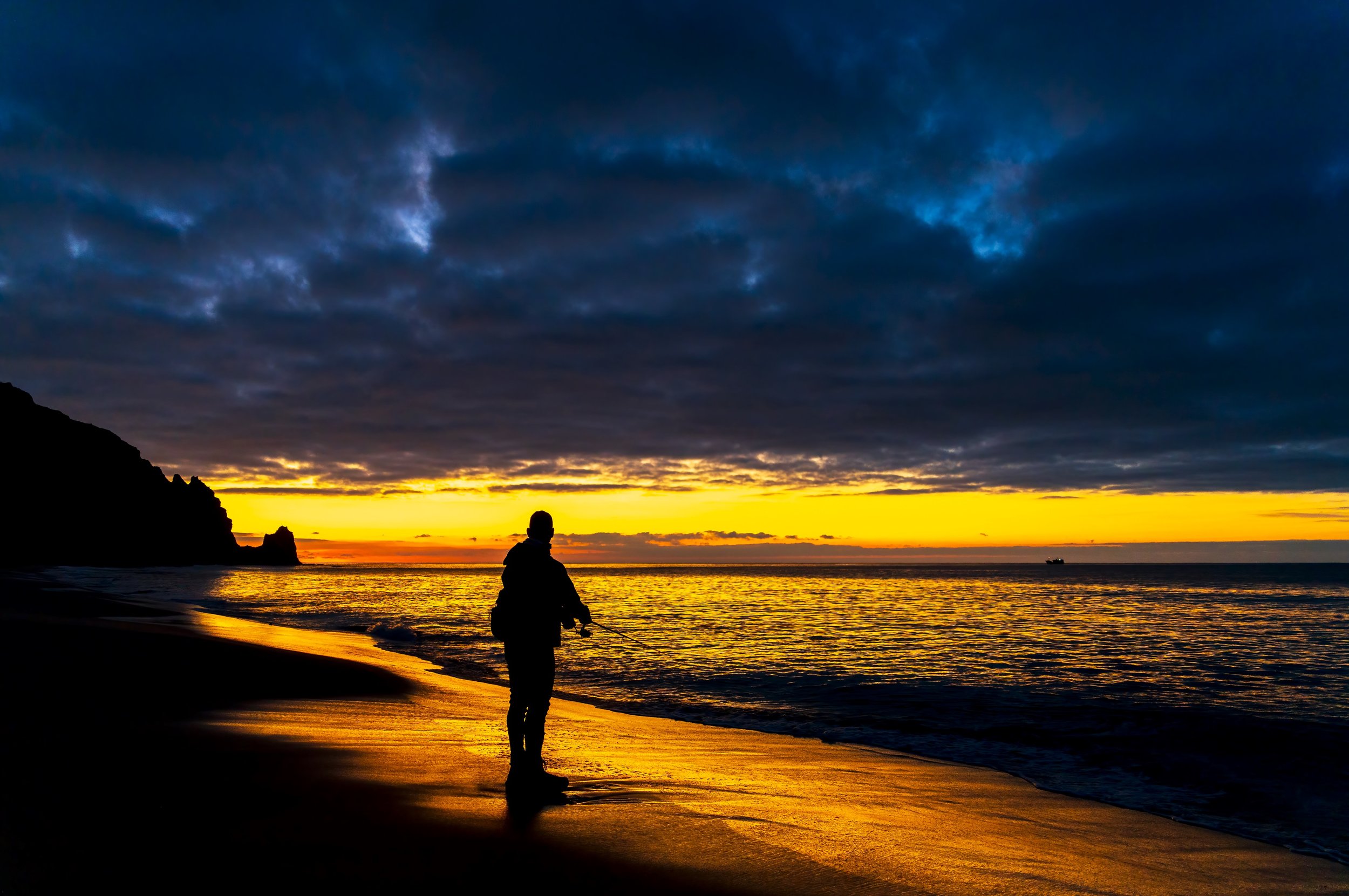
Some calmer fishing in the south coast
Disclosure - If you buy anything using links found around my website, I may make a commission. It doesn’t cost you anymore to buy via these affiliate links - and please feel entirely free not to do so of course - but it will help me to continue producing content. Thank you.